Apple Watch Ultra 2 vs. Garmin Forerunner 165: which fitness watch is worth it?
Compare picks & prices ↓Apple Watch Ultra 2 and Garmin Forerunner 165 are built for different buyers. This our comparison weighs training depth, battery, GPS, smartwatch features, phone compatibility, and price logic.
Choose by use case
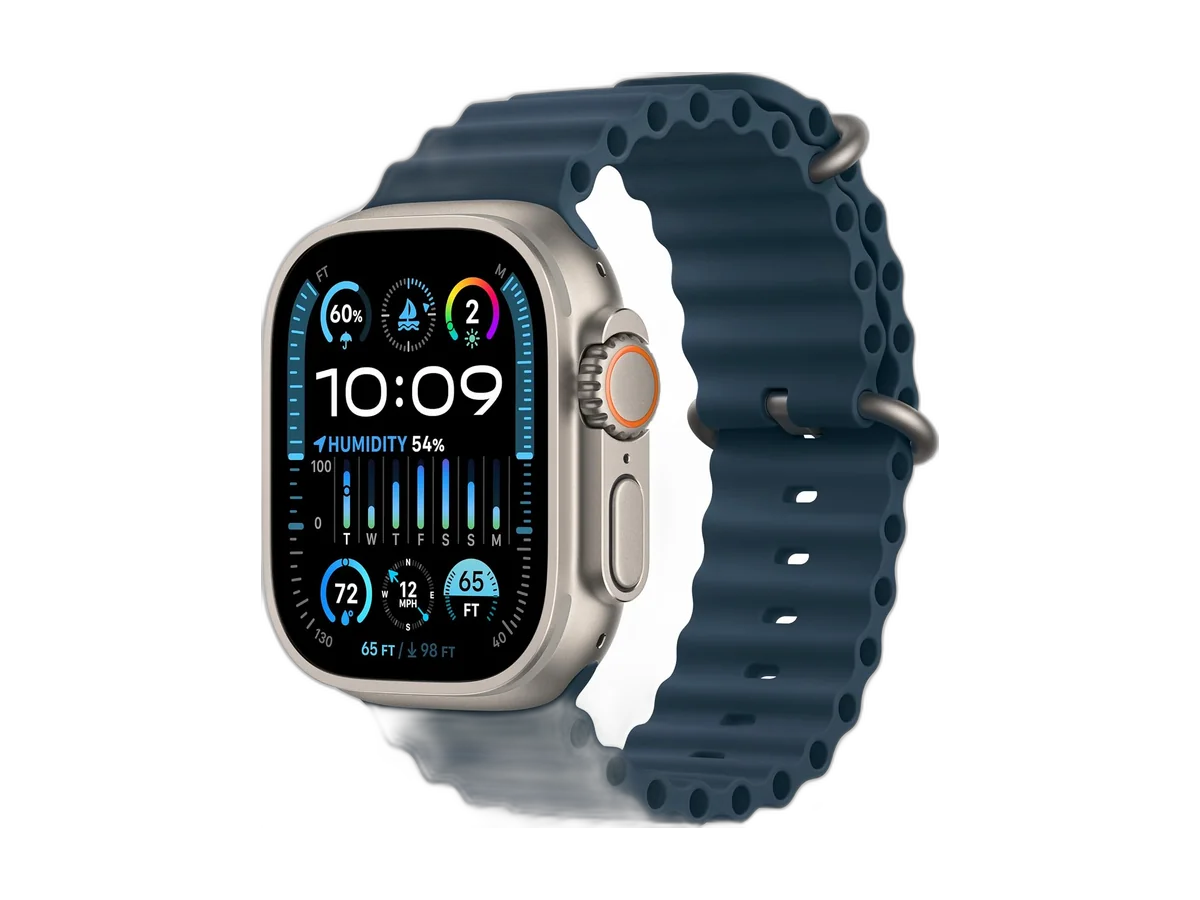
- Apple Watch Ultra 2Best for: iPhone owners who train outdoors, want a larger rugged case, and will use the extra battery and safety tools.The broader smartwatch and outdoor-tool option, but the larger and more expensive watch.Our full reviewPrices change often; use the retailer link for the current price.
-
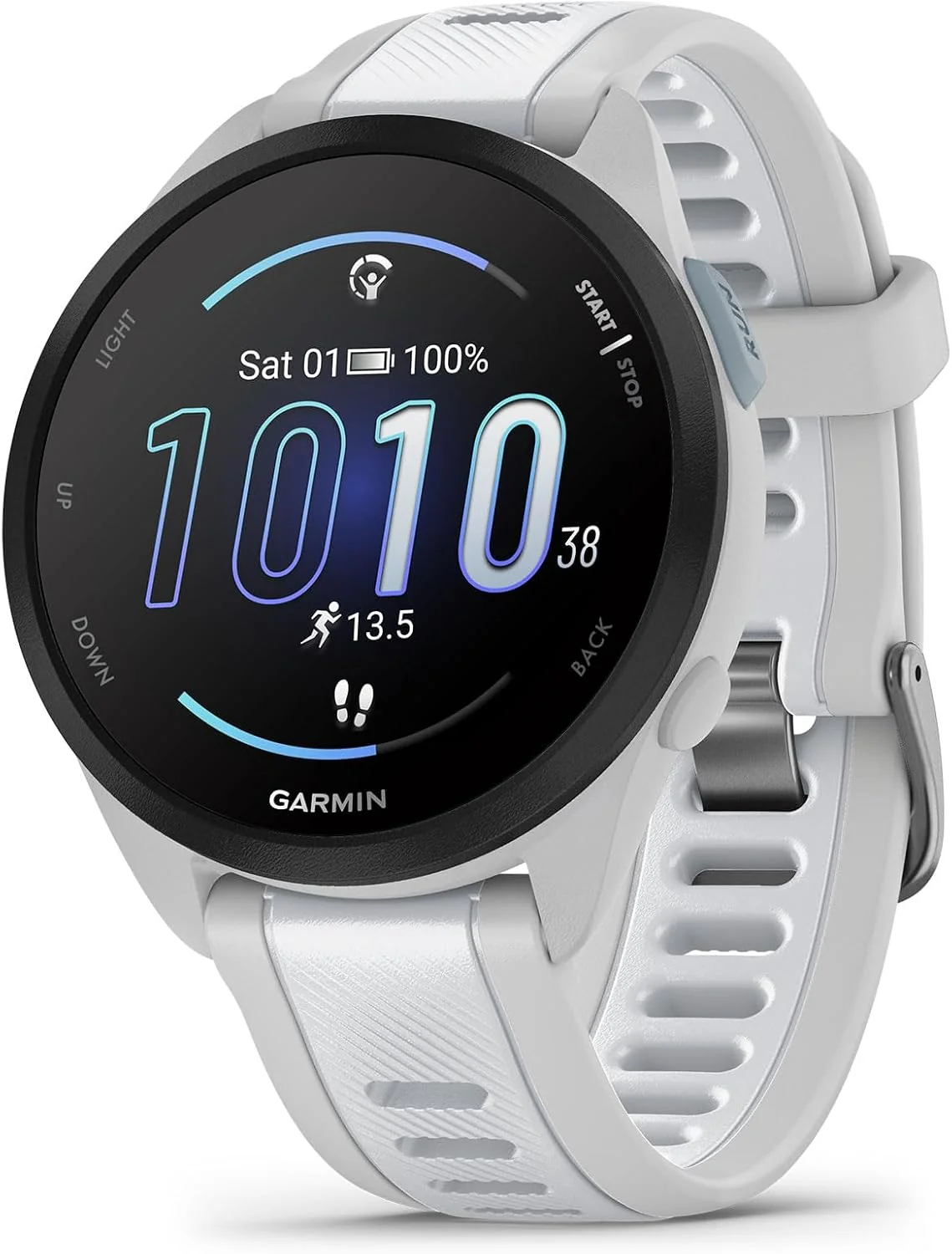 Garmin Forerunner 165Best for: Runners who want focused training guidance, built-in GPS, a bright AMOLED display, and longer battery life between charges.The more focused running watch and the easier recommendation when training is the main job.Our full reviewPrices change often; use the retailer link for the current price.
How we'd choose
| Pick | Our call | Buy it for | The catch |
|---|---|---|---|
| Apple Watch Ultra 2 | The broader smartwatch and outdoor-tool option, but the larger and more expensive watch. | iPhone owners who train outdoors, want a larger rugged case, and will use the extra battery and safety tools. | — |
| Garmin Forerunner 165 | The more focused running watch and the easier recommendation when training is the main job. | Runners who want focused training guidance, built-in GPS, a bright AMOLED display, and longer battery life between charges. | — |
-
Apple Watch Ultra 2
- Our call
- The broader smartwatch and outdoor-tool option, but the larger and more expensive watch.
- Buy it for
- iPhone owners who train outdoors, want a larger rugged case, and will use the extra battery and safety tools.
- The catch
- —
-
Garmin Forerunner 165
- Our call
- The more focused running watch and the easier recommendation when training is the main job.
- Buy it for
- Runners who want focused training guidance, built-in GPS, a bright AMOLED display, and longer battery life between charges.
- The catch
- —
As an Amazon Associate, we may earn from qualifying purchases.
Apple Watch Ultra 2 and Garmin Forerunner 165 can appear next to each other in a search for a fitness watch, but they are not really trying to be the same product.
Ultra 2 is a premium iPhone smartwatch with a rugged titanium case, cellular capability, safety features, a large display, and outdoor tools. Forerunner 165 is a running-first GPS watch with an AMOLED screen, training guidance, recovery context, and a much longer smartwatch-mode battery headline.
This is a comparison of which option is actually worth it. Apple and Garmin specifications are the source for the feature comparisons below, and the purchase paths are the exact Amazon variations already identified for Well Worth It Lab. Comfort, GPS accuracy, battery endurance, and long-term reliability still need real-world testing.
Quick answer
- Choose Apple Watch Ultra 2 if you use an iPhone and want one device for outdoor workouts, calls and notifications, safety features, apps, cellular service, and a larger rugged case.
- Choose Garmin Forerunner 165 if running and training are the center of the purchase, you value longer time between charges, or you want a simpler fitness-watch identity that works with iPhone or Android.
- Choose neither automatically if you mainly want sleep trends, steps, and occasional workouts. A lighter Apple Watch, a screenless tracker, or a less expensive Garmin may fit that job better.
At-a-glance comparison
| Apple Watch Ultra 2 | Garmin Forerunner 165 | |
|---|---|---|
| Core job | Premium smartwatch with outdoor fitness tools | Running-first GPS training watch |
| Phone fit | iPhone only | iPhone and Android through Garmin Connect |
| Published battery headline | Up to 36 hours normal use; up to 72 hours Low Power Mode | Up to 11 days smartwatch mode; up to 19 hours GPS-only |
| Display and case | 49mm titanium case; always-on display; up to 3,000 nits | 43mm polymer case; AMOLED display; 390 × 390 resolution |
| GPS direction | L1 + L5 precision dual-frequency GPS | GPS/GNSS running watch with training focus |
| Best reason to buy | One premium device for smartwatch, safety, and outdoor use | Focused training tools and less frequent charging |
| Main compromise | Large, expensive, and tied to iPhone | Less broad as an app-rich smartwatch |
The battery figures are manufacturer claims in different modes, not a lab result. Apple describes an active smartwatch usage model for its 36-hour number, while Garmin’s 11-day figure is smartwatch mode with activity tracking, notifications, and wrist-based heart rate. GPS, music, cellular, display settings, sensors, and software can move either number substantially.
Ultra 2 is the broader device
Apple’s technical specifications list a 49mm Grade 5 titanium case, a 3,000-nit always-on display, a customizable Action button, a compass, always-on altimeter, depth gauge, water-temperature sensor, cellular connectivity, and L1 + L5 precision dual-frequency GPS. It also includes the broader Apple Watch platform for notifications, safety features, Apple Pay, workouts, sleep, and apps.
That breadth matters when you want a watch that can move between training and everyday life without changing devices. A hiker may care about Backtrack and waypoints. A runner may care about workout views and training load. A traveler may care about cellular service and emergency features. Someone who wants a large, bright display may simply find Ultra 2 easier to read outdoors.
The compromise is physical and financial. The watch is about 12mm deep and roughly 61 grams in natural titanium before the band. It occupies more space on the wrist, costs more than a focused running watch, and only makes sense with an iPhone. If the real job is counting steps and showing notifications, much of the premium is unused.
Forerunner 165 is the more focused training tool
Garmin positions the Forerunner 165 around running and training: built-in GPS, adaptive suggested workouts, Garmin Coach, recovery insights, health and fitness metrics, a bright AMOLED display, and a battery target of up to 11 days in smartwatch mode. The product is easier to understand because its center of gravity is training rather than an app ecosystem.
That focus can be a feature. A newer runner who wants more than a basic tracker can get pace, distance, workout suggestions, and training context without buying Garmin’s most advanced tier. The lighter 43mm case and longer battery headline also make it a more natural fit for someone who wants to wear the watch through a normal week without treating charging as part of every workout.
Forerunner 165 is not a stripped-down device. It has smart notifications, sleep and wellness features, Garmin Pay on supported versions, a touchscreen, and a 5 ATM water rating. But the shopping decision is still about training first. If calls, apps, cellular service, and a full phone-like experience are the priority, Ultra 2 is the more coherent option.
Which is better for running?
Forerunner 165 is the easier running-first recommendation. Its suggested workouts, Garmin Coach positioning, running metrics, recovery context, and longer battery mode all point in the same direction. It is a watch for someone who wants the device to help answer, “What should I do today, and how is my training week going?”
Ultra 2 is more capable as an all-around outdoor watch, and it is a strong choice for an iPhone runner who also wants music, apps, cellular, safety features, and the Apple health ecosystem. The question is not whether Ultra 2 can run; it is whether the buyer will use the rest of the device enough to justify the size and price.
Which is better for sleep and everyday wear?
This is mostly a fit and ecosystem decision. Ultra 2 brings Apple’s sleep, health, safety, and notification platform, but its 49mm case is large. For some wrists, that size is fine; for others, it makes sleep wear and ordinary clothing less comfortable.
Forerunner 165 is physically less imposing and has the stronger battery margin on paper. That makes continuous wear easier to imagine, especially if the buyer values training and recovery context more than smart-home controls, messaging, or third-party apps.
Neither specification sheet can tell you whether the case will bother you overnight. Try the size where possible, check the return policy, and do not treat a watch’s wellness metrics as a diagnosis.
Price should follow the job
Ultra 2 is difficult to justify as a value purchase if the buyer only needs steps, notifications, and occasional workouts. Its price makes more sense when it replaces several devices or when cellular, outdoor hardware, safety tools, and battery margin solve a real routine problem.
Forerunner 165 is easier to justify for a runner who wants structured training without moving into a premium multisport tier. It can still be poor value if the buyer wants a broad smartwatch experience and ends up adding another device for calls, apps, or everyday convenience.
Check the exact model, band, seller, music option, cellular status, return terms, and current inventory on the retailer page. Amazon listings can change variation, price, and seller even when the ASIN remains familiar.
Which one should you buy?
Buy Apple Watch Ultra 2 if you are an iPhone owner who will use its rugged case, outdoor tools, safety platform, cellular option, and broad smartwatch features. The premium is about margin and breadth, not just a longer feature list.
Buy Garmin Forerunner 165 if you want a focused running watch with training guidance, built-in GPS, an AMOLED display, and less charging pressure. It is the clearer fit when training is the main job and the phone ecosystem is secondary.
Skip both for now if you are not sure what problem the watch needs to solve. A smaller, cheaper, or screenless device may be more comfortable and more likely to become part of your routine.
Well Worth It Lab may earn a commission from the tagged Amazon links above, at no additional cost to the buyer. Product details, seller, inventory, compatibility, price, seller, and availability can change.
Sources: Apple Watch Ultra 2 technical specifications, Garmin Forerunner 165 product comparison, Apple Watch Ultra 2 Amazon listing, and Garmin Forerunner 165 Amazon listing.
-
Apple Watch Ultra 2
iPhone owners who train outdoors, want a larger rugged case, and will use the extra battery and safety tools.
-
Garmin Forerunner 165
Runners who want focused training guidance, built-in GPS, a bright AMOLED display, and longer battery life between charges.
As an Amazon Associate, we may earn from qualifying purchases.
Frequently asked questions
Is Apple Watch Ultra 2 better than Garmin Forerunner 165?
Which has better battery life, Apple Watch Ultra 2 or Garmin Forerunner 165?
Does Garmin Forerunner 165 work with iPhone?
Which is better for running?
Affiliate disclosure
Some links on this page may be affiliate links — we may earn a commission if you buy through them, at no extra cost to you. We only recommend products we think are worth considering. Verdicts are not influenced by commissions.
Health disclaimer
This content is for informational purposes only and is not medical advice. Talk to a qualified professional before starting new supplements, treatments, or major health changes.