HigherDose Infrared Sauna Blanket review: worth $600?
Listed price ~$599 Recorded price snapshot. Confirm the final total at checkout.
Check current price on Amazon →We may earn a commission if you buy through our links or codes.
It works — you'll sweat, and the build quality is genuinely better than the $250 alternatives. Whether it earns the price tag depends almost entirely on whether you'd actually use it three times a week.
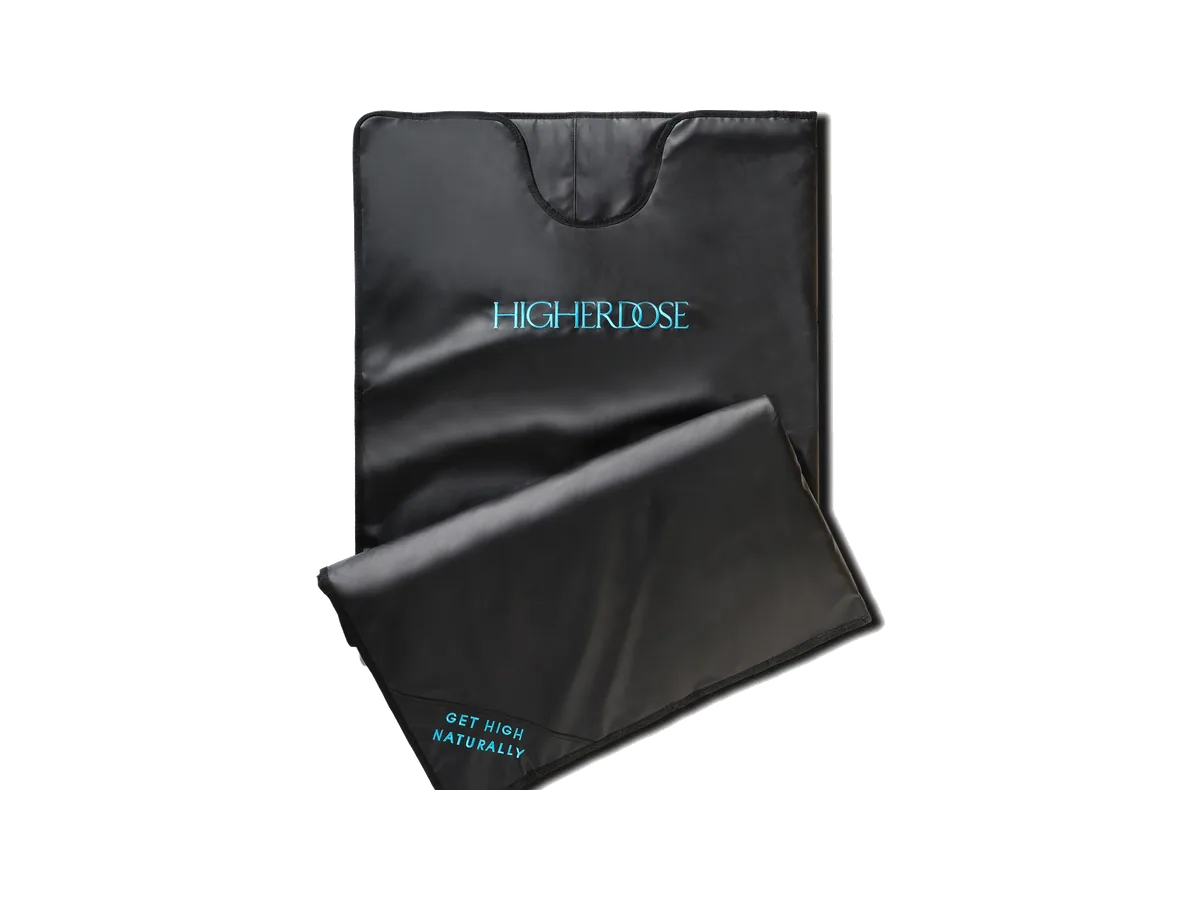
Our verdict
It works — you'll sweat, and the build quality is genuinely better than the $250 alternatives. Whether it earns the price tag depends almost entirely on whether you'd actually use it three times a week.
As an Amazon Associate, we may earn from qualifying purchases.
Why we landed on Good, But Not Essential
It works — you'll sweat, and the build quality is genuinely better than the $250 alternatives. Whether it earns the price tag depends almost entirely on whether you'd actually use it three times a week.
Who we'd buy it for People who already have a recovery routine they actually stick to and would otherwise be paying $40+ per session at an infrared sauna studio twice a week.
Who we'd tell to skip it You're hoping for a one-stop wellness solution, you don't have a quiet space to lie down for 30+ minutes, or you'd be shopping for sauna therapy mostly because of the marketing claims.
The part we will not talk past $599 is steep for what's effectively a heated sleeping bag.
Pros
- Hits its advertised temperature range and holds it without hot spots.
- Build quality is a clear step up from cheaper infrared blankets.
- Auto-shutoff and timer are well-designed — feels safe even when you're half-asleep.
Cons
- $599 is steep for what's effectively a heated sleeping bag.
- The setup-to-sweat friction (towels, flat surface, 15 min ramp) kills consistency.
- Faint chemical smell on the first few uses.
- Marketing leans on 'detox' claims that aren't well supported.
We’d buy the HigherDOSE sauna blanket if you already stick to a recovery routine and you would otherwise pay for infrared studio sessions. We’d skip it if you’re hoping for a one-stop wellness solution, you don’t have a quiet space to lie down for 30+ minutes, or you’d be shopping for sauna therapy mostly because of the marketing claims. You’ll sweat, and the build is better than the cheaper blankets, but $599 is steep for what’s effectively a heated sleeping bag.
I went into this one biased against it. Six hundred dollars for what marketing copy describes as a “full-body detox wrap” is the kind of language that immediately makes me reach for the back button.
But heat therapy itself isn’t junk science. Dr. Rhonda Patrick has spent years explaining the cardiovascular and longevity research behind sauna use — most of which traces back to the Laukkanen group’s work in Finland, which followed thousands of people for decades and found a strong association between regular sauna use and lower all-cause mortality. Andrew Huberman has covered the same studies on his podcast. The “heat exposure is probably good for you” thesis isn’t controversial.
What is controversial is whether an infrared blanket — at 130–160°F, with you lying flat for 30–45 minutes — gives you enough of the same dose-response to matter. So I tried it.
Quick verdict
If you’d actually use it three times a week for six months, the HigherDOSE is the cleanest, best-built infrared blanket on the market. If you wouldn’t, it’ll quickly become a $599 reminder of a wellness phase you’re not in.
What’s actually good about it
The build is the thing that surprised me. The stitching, the controller, the auto-shutoff — this isn’t a generic Alibaba-rebrand. The temperature climbs predictably and stays there without hot spots, and the timer-and-temp logic is genuinely thoughtful (it’ll catch you if you doze off).
You will sweat. A lot. After about twelve minutes the inside of the blanket reads close to its advertised temp, and from there a 30-minute session leaves you visibly drenched. Heart rate sits around 100–110 bpm for most of the session, which lines up with what you’d expect from a passive heat-therapy stimulus.
What’s worth pushing back on
The marketing leans heavily on “detox.” Sweat does contain trace amounts of heavy metals and BPA — but in pretty small quantities relative to what your kidneys and liver are already handling on a normal day. If the headline pitch for a wellness product is detox, that’s usually a sign to read the rest of the claims with extra skepticism. The cleaner version of the pitch — heat therapy is good for you and this is one way to get more of it — is the one I’d actually buy.
The other honest issue is that infrared blankets are not the same dose as a Finnish sauna. The temperatures are lower, the duration is longer to compensate, and the body position is wrong. If the data you care about is “does this give me the cardiovascular benefits the studies show?” the honest answer is: probably partially, but no one has run the rigorous head-to-head trial.
Friction kills the routine
The bigger problem isn’t the product — it’s the use case. To do a session you need a flat surface, towels under and over, a way to clean up, and a guaranteed quiet 45 minutes. By the time I got to my third week, the bottleneck was never the blanket. It was finding the time block.
The product is fine. The bottleneck is whether the rest of your life makes room for it.
This is the gym-membership problem. The thing you bought isn’t the issue; whether you’ll show up is.
Price & value
At ~$599 (currently around that price on Amazon), the math gets interesting fast.
If you’d otherwise pay $40 per session at an infrared sauna studio twice a week, you’d hit the breakeven point in about 4 months. If you’d realistically only use the blanket 25–30 times in a year, you’re at ~$20 per use — at which point a 5-pack of studio drop-ins is the better starter purchase.
Alternatives worth considering
- Studio sauna passes first. If you’ve never actually committed to twice-a-week sauna use, prove the habit before buying the hardware.
- Mid-tier infrared blankets (~$249–$299) get you about 70% of the experience with worse heat distribution and rougher build quality. Reasonable as a “try the format” purchase.
- Higher-end home options like the Sunlighten Solo pod ($2,000+) deliver a closer-to-real-sauna experience but have radically different price and footprint.
Final verdict
Good, But Not Essential. Verified ASIN — purchase via Amazon supports the site at no extra cost.
The HigherDOSE is the best-executed product in its category, and heat therapy is one of the few “wellness” categories with real underlying science. The reason I’m not pushing the score higher is purely about price-to-likely-use. If the question is “should I buy this as my first recovery purchase,” the answer is almost always no — start with sauna passes. If the question is “I already pay for sauna sessions weekly and want a home option,” then yes, this is the one I’d recommend.
Who it's for
People who already have a recovery routine they actually stick to and would otherwise be paying $40+ per session at an infrared sauna studio twice a week.
Who should skip it
You're hoping for a one-stop wellness solution, you don't have a quiet space to lie down for 30+ minutes, or you'd be shopping for sauna therapy mostly because of the marketing claims.
In this review
- HigherDOSE Infrared Sauna BlanketVerified ASIN — purchase via Amazon supports the site at no extra cost.Prices change often; use the retailer link for the current price.
HigherDOSE Infrared Sauna Blanket
Good, But Not Essential
It works — you'll sweat, and the build quality is genuinely better than the $250 alternatives. Whether it earns the price tag depends almost entirely on whether you'd actually use it three times a week.
As an Amazon Associate, we may earn from qualifying purchases.
Frequently asked questions
Does it actually make you sweat?
Is the 'detox' claim real?
How does this compare to a real sauna?
What does the research actually say about heat therapy?
Affiliate disclosure
Some links on this page may be affiliate links — we may earn a commission if you buy through them, at no extra cost to you. We only recommend products we think are worth considering. Verdicts are not influenced by commissions.
Health disclaimer
This content is for informational purposes only and is not medical advice. Talk to a qualified professional before starting new supplements, treatments, or major health changes.