LifeStraw Home pitcher review: cheap microplastic protection that actually works
Listed price $64.95 Recorded price snapshot. Confirm the final total at checkout.
Check current price on Amazon →We may earn a commission if you buy through our links or codes.
If your tap water is generally fine but you want a real, certified barrier between you and microplastics, lead, and chlorine — this is the cheapest pitcher that actually delivers it.
Our verdict
If your tap water is generally fine but you want a real, certified barrier between you and microplastics, lead, and chlorine — this is the cheapest pitcher that actually delivers it.
As an Amazon Associate, we may earn from qualifying purchases.
Why we landed on Definitely Well Worth It
If your tap water is generally fine but you want a real, certified barrier between you and microplastics, lead, and chlorine — this is the cheapest pitcher that actually delivers it.
Who we'd buy it for Apartments, rentals, and anyone who wants serious filtration without committing to a $400 counter-mounted system.
Who we'd tell to skip it You need fluoride removal (this isn't built for that), you have a household of 5+, or you'd rather not deal with glass.
The part we will not talk past The pour rate is slower than a Brita.
Pros
- NSF/ANSI certified for microplastics, lead, mercury, PFAS, and a long list of other contaminants.
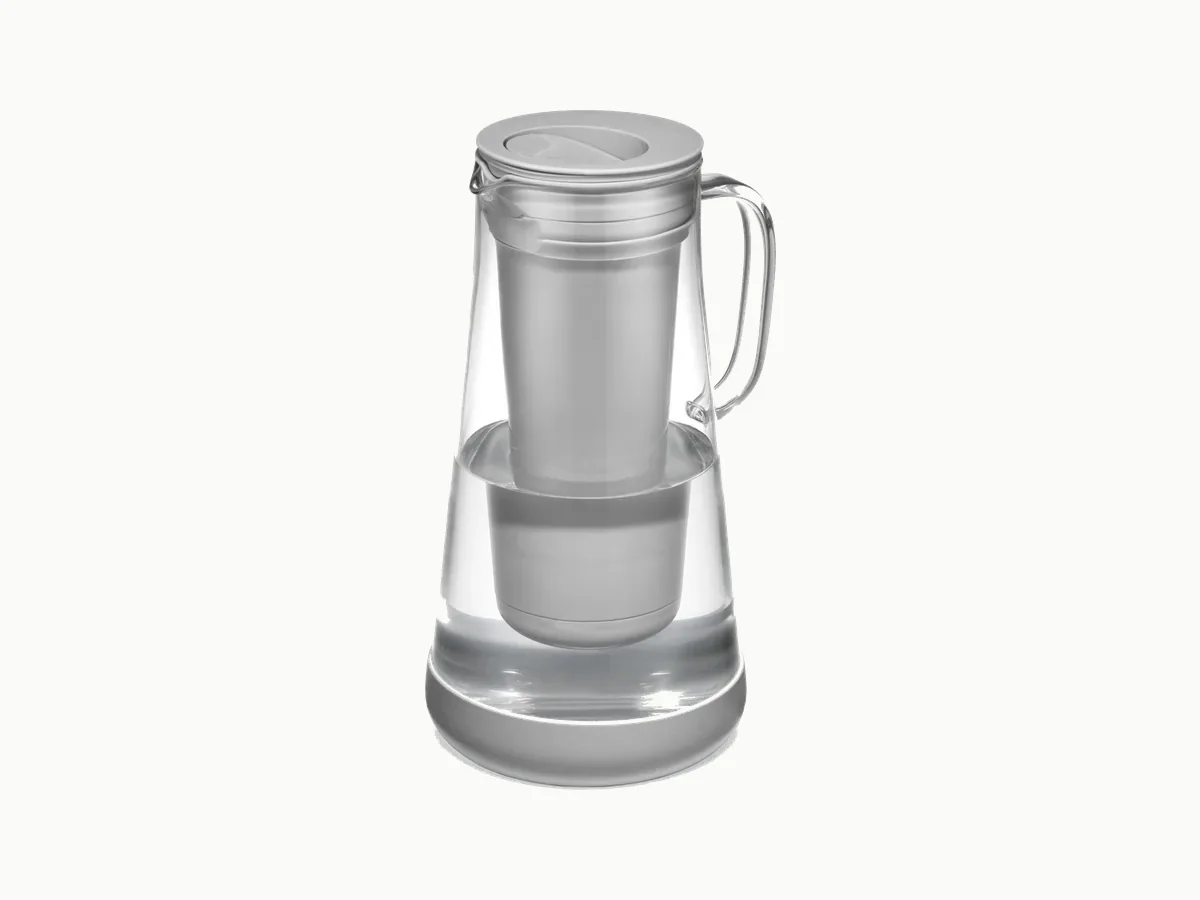
- Glass body with a silicone base — no plastic touching the filtered water.
- Filter cost works out to about $0.40 per gallon.
Cons
- The pour rate is slower than a Brita.
- Glass is heavier and more breakable than the plastic competitors.
- Capacity (7 cups) is on the small side for households of 4+.
We’d buy the LifeStraw Home pitcher if your tap water is generally fine and you want a certified barrier for microplastics, lead, and chlorine without a counter-mounted system. We’d leave it if you need fluoride removal, you have a household of 5 or more, or you’d rather not deal with glass. It pours slower than a basic pitcher, and the glass body is heavier.
The Environmental Working Group’s Tap Water Database shows that even municipalities that pass federal standards still routinely have detectable levels of disinfection byproducts, lead, and increasingly PFAS (“forever chemicals”). The independent ConsumerReports water-filter testing that came out in 2024 showed that a lot of pitchers marketed as “advanced” actually filter only what the basic Brita does — chlorine and a bit of taste — while quietly underperforming on the contaminants people actually care about now.
So when I went looking for a pitcher to recommend, the test was simple: does it have third-party certification for the things that matter, or is it just claiming to?
Why this one
The LifeStraw Home is one of the small number of pitchers I could find that’s certified to NSF/ANSI 401 — the standard that explicitly covers “emerging contaminants” including microplastics — alongside NSF 42, 53, and 244 for chlorine, lead, mercury, and microbiological cysts respectively. That’s a longer certification list than 90% of competitors, and meaningfully longer than the Brita Standard.
The certifications matter because the words on the marketing copy aren’t regulated. A pitcher can say “filters microplastics” without ever having submitted to any third-party test. The NSF stamp means an actual independent lab verified the claim against a defined standard.
Living with it
The pour rate is slower than a Brita. You feel it on day one and stop noticing by day five — fill the reservoir whenever you’re already at the sink and the pitcher is always full when you want it. The glass body is heavier than I expected, in a way that actually feels nice. The silicone base means it doesn’t slide around on a wet counter.
The filter cartridge is rated for 40 gallons or about 2 months. Real-world for two people drinking ~80 oz/day each, that lined up almost exactly.
What I’d push back on
LifeStraw’s branding leans on its NGO origin story, which is genuinely cool but doesn’t make the product better. Look past the marketing and decide based on what you actually need filtered.
If your priority is fluoride removal, this won’t do that. If you’re on well water with high iron or hardness, this isn’t the right tool. If you have a household of five and people refilling becomes a chore, you’ll want something with bigger capacity.
Price & value
At around $65, with replacement filters running ~$25 every two months, you’re at about $200 per year for serious certified filtration. That’s less than 4 months of bottled water for one person, and an order of magnitude cheaper than a counter-mounted RO system.
Final verdict
Strong Buy.
The combination of glass, real third-party certifications, and reasonable price is rare in this category. It’s the pitcher I’d buy for a friend who asked “what filter should I get?” without making them read a 4,000-word PFAS explainer first.
Who it's for
Apartments, rentals, and anyone who wants serious filtration without committing to a $400 counter-mounted system.
Who should skip it
You need fluoride removal (this isn't built for that), you have a household of 5+, or you'd rather not deal with glass.
In this review
- LifeStraw Home 7-Cup Pitcher (Glass)Prices change often; use the retailer link for the current price.
LifeStraw Home 7-Cup Pitcher (Glass)
Definitely Well Worth It
If your tap water is generally fine but you want a real, certified barrier between you and microplastics, lead, and chlorine — this is the cheapest pitcher that actually delivers it.
As an Amazon Associate, we may earn from qualifying purchases.
Frequently asked questions
Does it actually filter microplastics?
Why glass instead of plastic?
Does it remove fluoride?
Where can I check what's actually in my tap water?
Affiliate disclosure
Some links on this page may be affiliate links — we may earn a commission if you buy through them, at no extra cost to you. We only recommend products we think are worth considering. Verdicts are not influenced by commissions.