Liquid I.V. Hydration Multiplier review: depends on the person
We may earn a commission if you buy through our links or codes.
Best household name — convenient, but added sugar changes the use case.
Our verdict
Best household name — convenient, but added sugar changes the use case.
As an Amazon Associate, we may earn from qualifying purchases.
Why we landed on Depends on the Person
Best household name — convenient, but added sugar changes the use case.
Who we'd buy it for Households that want a familiar, easy-to-find option for occasional use.
Who we'd tell to skip it Anyone watching sugar intake; clean-label purists.
The part we will not talk past Contains added sugar — a meaningful amount
Pros
- Available in nearly every store
- Pleasant flavors most people enjoy
- Useful for sickness, hangovers, or travel
- Lower sodium than LMNT, easier on casual palates
Cons
- Contains added sugar — a meaningful amount
- Includes artificial colors in some flavors
- Sweetener mix isn't as clean as Cure or LMNT
We’d buy Liquid I.V. for occasional use when you want a familiar electrolyte stick you can find almost anywhere. We’d leave it if you’re watching sugar or you want a cleaner label. The absorption idea is real, the marketing overstates it, and added sugar changes who it’s for.
Quick answer
Around 500mg of sodium per stick (varying roughly 490–630mg by flavor), delivered alongside real sugar that drives absorption. The mechanism is genuine. The “equivalent to drinking multiple bottles of water” style of claim is not something to take literally.
The mechanism is real
Liquid I.V. is built on oral rehydration therapy — the same principle behind the WHO’s rehydration solutions, which have saved an enormous number of lives treating dehydration from illness.
The underlying biology: the sodium-glucose cotransporter in the small intestine moves sodium and glucose together, and water follows osmotically. Having glucose present genuinely does increase the rate at which sodium and water are absorbed compared with water alone.
That is real science, and it is why the sugar is in there rather than being a lazy sweetener choice.
Where the marketing outruns the science
Oral rehydration therapy is most valuable when someone is actually dehydrated — from illness, heavy sweating, or fluid loss. In that context, faster absorption matters a great deal.
For a normally hydrated person drinking it at a desk, faster absorption of water they did not need is not a meaningful benefit. The mechanism is real; the everyday application is thinner than the branding suggests.
Claims framed as equivalence to several bottles of water describe absorption efficiency under specific conditions, not a multiplication of the water you drank. You are drinking one glass of water.
The sugar question
Each stick contains real added sugar — around 11g in the original formulation. That is deliberate and mechanistically necessary, not an oversight.
It also means this is not calorically free, and if you drink several a day the sugar accumulates. Anyone limiting sugar should look at LMNT or Cure instead, both of which avoid it, accepting slower absorption in exchange.
Sugar-free variants exist, and it is worth understanding that removing the sugar also removes the cotransporter mechanism that distinguished the product in the first place.
Sodium in context
At roughly 500mg, Liquid I.V. sits in the middle of the category — half of LMNT’s 1,000mg, more than a typical tablet. For most people that is a sensible amount, and it is one reason the product suits a broader audience than the high-sodium brands.
Content varies by flavor, so check the label if the exact number matters to you.
Where it genuinely shines
Illness. Vomiting, diarrhoea, fever — this is oral rehydration therapy working as intended, and it is the strongest use case by a distance.
Hangovers. Same reasoning: real fluid loss to replace.
Heavy sweating, particularly in heat.
Travel. Long flights, unfamiliar climates, disrupted routine.
Availability. It is in essentially every pharmacy and supermarket, which is worth something when you need it unexpectedly.
Who should buy it
Anyone who wants a genuinely effective rehydration product for illness, hangovers, or heavy sweating, and does not mind the sugar. The convenience and availability are real advantages.
Who should skip it
Skip it if you are limiting sugar. Skip it as an everyday desk drink — water is doing that job. And skip it if you want the highest sodium content for heavy sweating or low-carb eating, where LMNT is better matched.
Final verdict
Good, but not essential — with the important caveat that it is genuinely excellent for the narrow situations it was designed around. Buy it for the sick day, the hangover, and the hot hike. Do not buy the everyday-hydration framing.
See our best electrolyte powders guide.
Who it's for
Households that want a familiar, easy-to-find option for occasional use.
Who should skip it
Anyone watching sugar intake; clean-label purists.
In this review
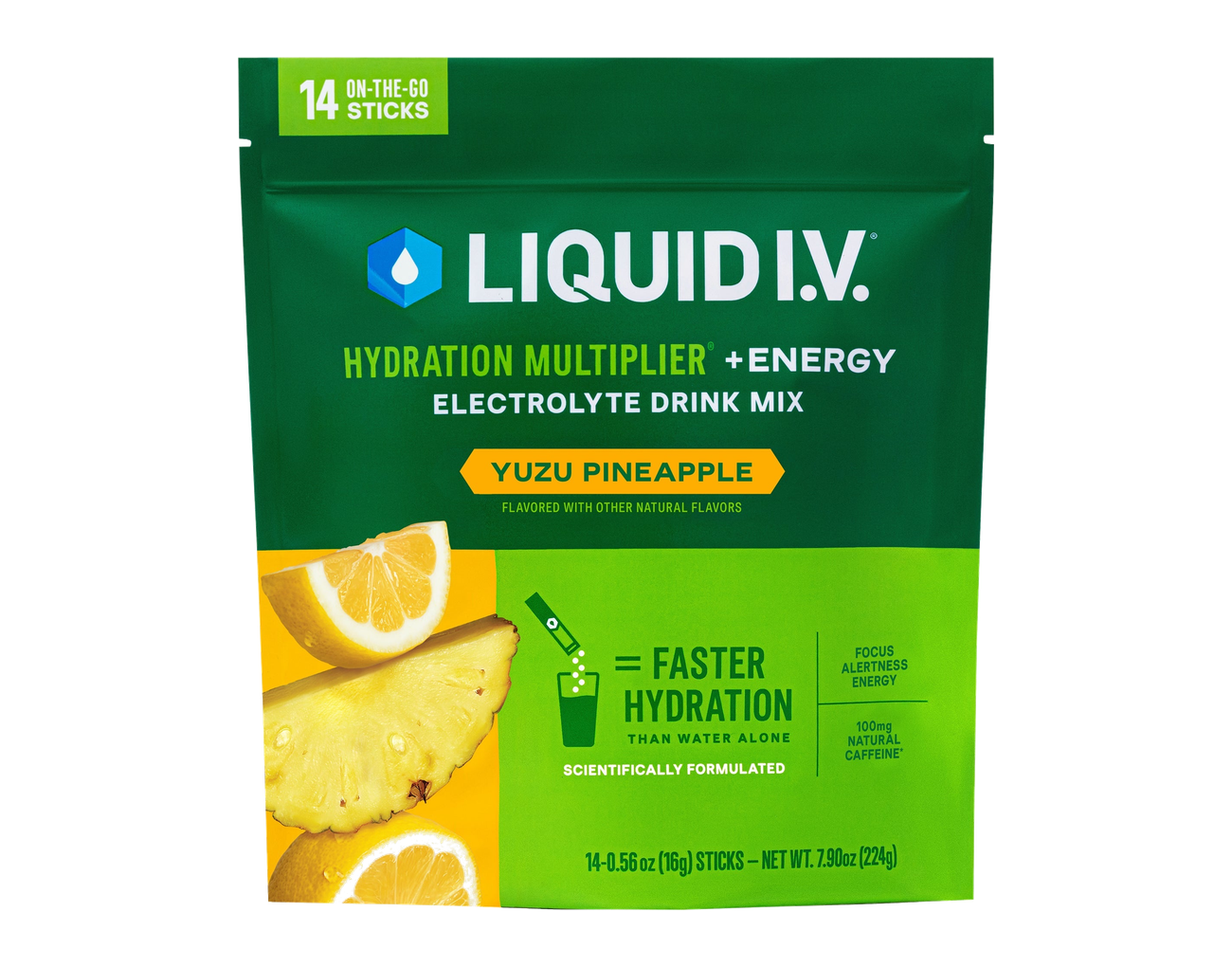
- Liquid I.V. Hydration MultiplierExact Lemon Lime 16-serving ASIN checked August 3, 2026; confirm flavor and pack size before buying.Prices change often; use the retailer link for the current price.
Liquid I.V. Hydration Multiplier
Depends on the Person
Best household name — convenient, but added sugar changes the use case.
As an Amazon Associate, we may earn from qualifying purchases.
Frequently asked questions
How much sodium is in Liquid I.V.?
Does Liquid I.V. really hydrate better than water?
Why does it contain sugar?
When is Liquid I.V. actually worth using?
Liquid I.V. or LMNT?
Affiliate disclosure
Some links on this page may be affiliate links — we may earn a commission if you buy through them, at no extra cost to you. We only recommend products we think are worth considering. Verdicts are not influenced by commissions.
Health disclaimer
This content is for informational purposes only and is not medical advice. Talk to a qualified professional before starting new supplements, treatments, or major health changes.