AquaBliss SF100 review: good, but not essential
We may earn a commission if you buy through our links or codes.
Best budget attachment — inexpensive, less premium, easy to try.
Our verdict
Best budget attachment — inexpensive, less premium, easy to try.
As an Amazon Associate, we may earn from qualifying purchases.
Why we landed on Good, But Not Essential
Best budget attachment — inexpensive, less premium, easy to try.
Who we'd buy it for Renters and budget buyers who want a low-cost inline filter.
Who we'd tell to skip it Anyone who cares about how their bathroom looks.
The part we will not talk past Bulky industrial look
Pros
- Significantly cheaper than replacement showerheads
- Multi-stage filter media including KDF and calcium sulfite
- Works with any existing showerhead
- Cheap replacement cartridges
Cons
- Bulky industrial look
- Cartridge changes are slightly more involved
- May reduce water pressure on older plumbing
We’d buy the AquaBliss SF100 if you are a renter or a budget buyer who wants a low-cost inline shower filter and you do not care how it looks. We’d skip it if you care about how the bathroom looks. It is bulky, cartridge changes are a bit more involved, and it may reduce water pressure on older plumbing.
The AquaBliss SF100 is the unglamorous, cheap, multi-stage shower filter that has quietly outsold most of the design-led competition. It is not pretty. It works on the same chemistry as products costing several times more.
Quick answer
A multi-stage inline filter — meaning it fits between your shower arm and your existing showerhead — using KDF-55, calcium sulfite, and additional media. Considerably cheaper than Jolie or Hello Klean, and it lets you keep the showerhead you already own.
Inline, not a showerhead
This is the key structural difference and it cuts both ways.
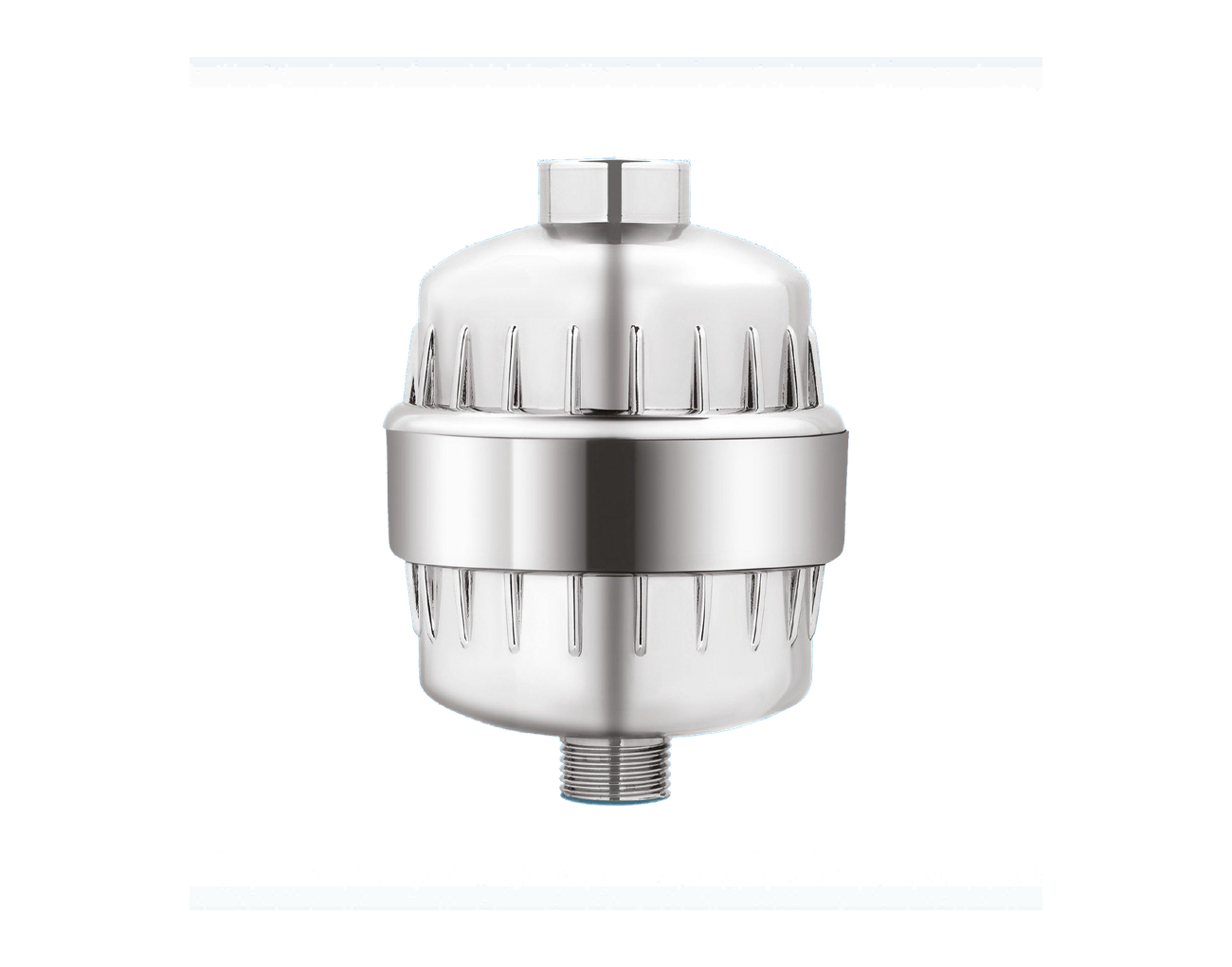
The SF100 is a cylinder that threads onto your shower arm, with your existing showerhead attached to the other end. You keep whatever head you like — rainfall, handheld, high-pressure — and add filtration in front of it.
The advantage: you are not forced to accept someone else’s showerhead design. If you already own a shower head you like, or have a fixed rainfall installation, an inline filter is the only practical option.
The disadvantage: it is visibly an extra cylinder in your shower. It is not attractive, and it extends the shower arm slightly, which can lower the head’s effective height.
The filtration
Multi-stage, combining KDF-55 (copper-zinc redox media that reduces free chlorine and some dissolved heavy metals), calcium sulfite (neutralises free chlorine to chloride), and further media stages.
That is fundamentally the same chemistry as the premium options. The category’s core technology is well-established and not proprietary — which is exactly why a cheap filter can perform comparably on chlorine.
What it does not do, like everything else in the category, is soften water. Hardness requires ion exchange at the point of entry. If limescale is your complaint, no shower filter fixes it.
What you give up at this price
No clinical outcomes study. Jolie is the only product here that commissioned one. AquaBliss sells on mechanism, which is the category norm.
No specific third-party tested percentage of the kind Hello Klean publishes via SGS.
Aesthetics. It looks like plumbing.
Whether those matter depends on whether you want evidence and design, or whether you want KDF and calcium sulfite between you and the chlorine at the lowest sensible price.
Running costs
Filter cartridges are inexpensive, which over time is the strongest argument for this product. Premium showerhead filters can cost more in annual replacements than the AquaBliss costs to buy and run entirely.
Replacement is roughly every six months depending on water quality and usage — generally longer than the three-month cycle typical of showerhead-integrated filters, because the cartridge is larger.
Who should buy it
Anyone who wants shower filtration at the lowest sensible cost, anyone who wants to keep an existing showerhead, and anyone with a fixed rainfall head where a replacement showerhead is not an option. Also the pragmatic choice if you want to test whether filtration helps your skin before committing to a premium product.
Who should skip it
Skip it if the appearance of your shower matters to you. Skip it if you want the strongest available evidence, which is Jolie. And skip it if your problem is hardness rather than chlorine.
Final verdict
Strong Buy on value. It uses the same core chemistry as products costing several times more, the cartridges are cheap, and it works with the showerhead you already have. You are giving up design and published evidence, not filtration mechanism.
Who it's for
Renters and budget buyers who want a low-cost inline filter.
Who should skip it
Anyone who cares about how their bathroom looks.
In this review
- AquaBliss SF100Best budget attachment — inexpensive, less premium, easy to try.Prices change often; use the retailer link for the current price.
AquaBliss SF100
Good, But Not Essential
Best budget attachment — inexpensive, less premium, easy to try.
As an Amazon Associate, we may earn from qualifying purchases.
Frequently asked questions
How is an inline filter different from a filtered showerhead?
Does the AquaBliss filter as well as premium options?
How often do you replace the cartridge?
Does it reduce water pressure?
Does it soften hard water?
Affiliate disclosure
Some links on this page may be affiliate links — we may earn a commission if you buy through them, at no extra cost to you. We only recommend products we think are worth considering. Verdicts are not influenced by commissions.
Health disclaimer
This content is for informational purposes only and is not medical advice. Talk to a qualified professional before starting new supplements, treatments, or major health changes.