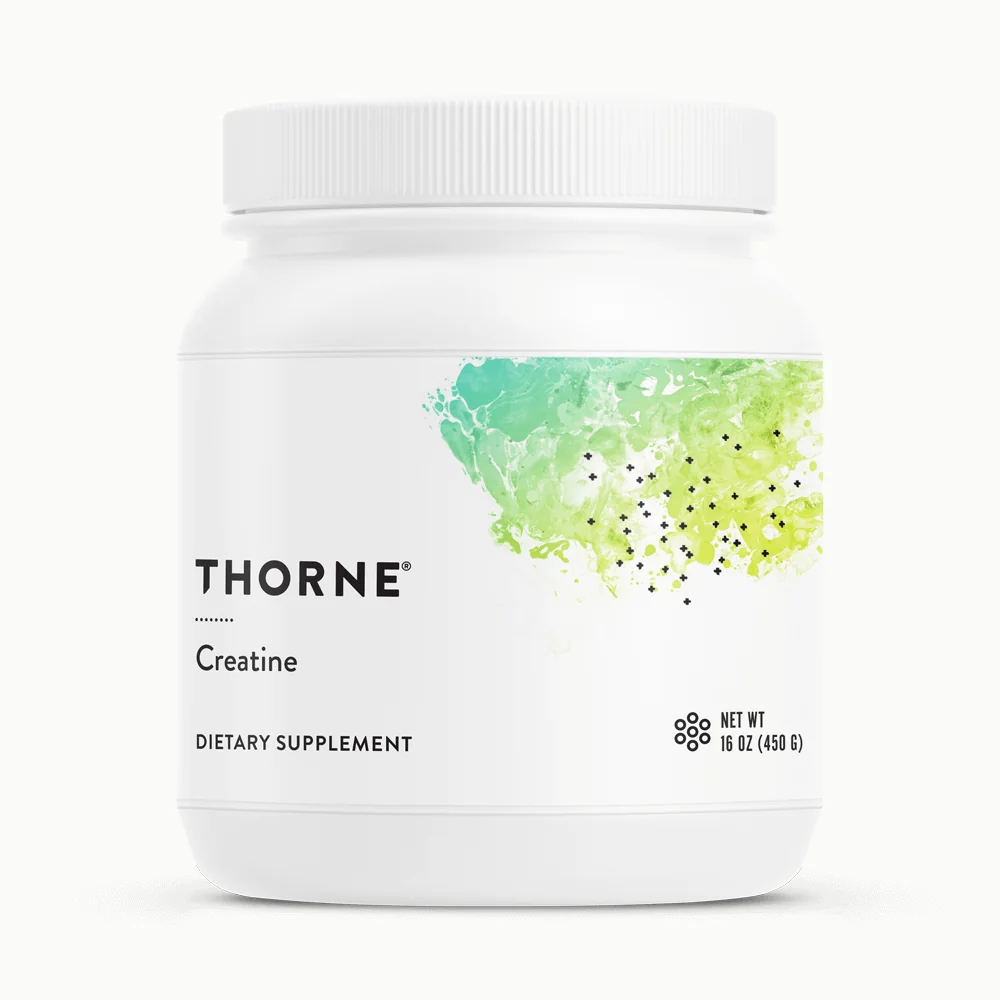
Thorne Creatine review: definitely well worth it
We may earn a commission if you buy through our links or codes.
Best overall powder — boring in the best possible way.
Our verdict
Best overall powder — boring in the best possible way.
As an Amazon Associate, we may earn from qualifying purchases.
Why we landed on Definitely Well Worth It
Best overall powder — boring in the best possible way.
Who we'd buy it for Beginners who want a simple, reputable creatine monohydrate powder.
Who we'd tell to skip it Pure value-seekers — Bulk Supplements gives you the same active ingredient for less.
The part we will not talk past Higher price per serving than generic monohydrate
Pros
- NSF Certified for Sport — strictest available certification
- Plain monohydrate, no fillers or additives
- Micronized for clean mixing
- Track record as a clinically-trusted supplement brand
Cons
- Higher price per serving than generic monohydrate
- Unflavored — needs to be mixed into something with taste
- Smaller container size than budget options
We’d buy Thorne Creatine if you want one unflavored micronized monohydrate, NSF Certified for Sport, and no further decision. We’d skip it if you are a pure value-seeker — Bulk Supplements gives you the same active ingredient for less. There is very little else to say about it, which is the highest compliment you can pay a creatine.
Quick answer
5g of micronized creatine monohydrate per serving, NSF Certified for Sport, roughly $0.49 per serving at 90 servings for around $44. If you want one creatine and no further thought, this is it.
Why monohydrate, and why that ends the debate
Creatine monohydrate is the most-studied sports supplement in existence. The overwhelming majority of the research base — for strength, for lean mass, and increasingly for cognitive endpoints — used monohydrate specifically.
Everything sold at a premium over monohydrate (HCl, ethyl ester, buffered forms, liquid) is marketed on absorption or reduced bloating. None has a research base approaching monohydrate’s, and none has shown a clinically meaningful advantage. Paying more for those is paying for marketing.
“Micronized” simply means the particles are milled finer so it disperses better in water. It is a mixability improvement, not a potency one, and it is genuinely nicer to drink.
What NSF Certified for Sport actually means
This is the part that justifies Thorne’s modest premium over generic monohydrate.
Supplements are regulated loosely. NSF Certified for Sport is a voluntary third-party programme that tests for label accuracy and screens for over 280 substances banned in sport, with ongoing batch testing rather than a one-time check.
For a drug-tested athlete it is close to mandatory. For everyone else it is the most reliable available signal that what is in the tub matches what is on the label — which, given the testing failures across the creatine gummy category, is not a trivial assurance.
Cost in context
At about $0.49 per 5g serving, Thorne sits meaningfully below Momentous at roughly $0.65 while carrying the same NSF Certified for Sport status. It sits above bulk generic monohydrate, which can be a fraction of the price without third-party certification.
That is the entire decision: pay a few cents per serving for verified purity, or do not.
How to take it
5g daily, timing irrelevant. Loading phases are optional — they saturate muscle stores faster but reach the same endpoint as simply taking 5g daily for a few weeks.
Take it with water at whatever time you will actually remember. Consistency matters considerably more than timing, and the most common failure is not the wrong protocol but stopping.
Some people notice initial water retention. This is intracellular, expected, and not fat.
Who should buy it
Anyone who wants creatine without researching creatine. Particularly anyone tested for sport, anyone who wants label accuracy verified by a third party, and anyone who has looked at the gummy category and concluded they would rather have something boring and verifiable.
Who should skip it
Skip it if cost is the binding constraint — plain bulk monohydrate delivers the same molecule for less, if you accept the absence of third-party certification. Skip it if you will not take powder consistently, in which case adherence is your real problem and a gummy may genuinely serve you better despite the cost and dosing caveats.
Final verdict
Definitely well worth it. Correct form, verified purity, sensible price, no marketing story. This is the default recommendation in the category and the burden is on anything else to justify costing more.
See our best creatine monohydrate guide for alternatives, and check the current price at the retailer link.
Who it's for
Beginners who want a simple, reputable creatine monohydrate powder.
Who should skip it
Pure value-seekers — Bulk Supplements gives you the same active ingredient for less.
In this review
- Thorne CreatineBest overall powder — boring in the best possible way.Prices change often; use the retailer link for the current price.
Thorne Creatine
Definitely Well Worth It
Best overall powder — boring in the best possible way.
As an Amazon Associate, we may earn from qualifying purchases.
Frequently asked questions
Is Thorne Creatine NSF Certified for Sport?
How much does Thorne Creatine cost per serving?
Does micronized creatine work better?
Do I need to do a loading phase?
Is monohydrate better than HCl or other forms?
Affiliate disclosure
Some links on this page may be affiliate links — we may earn a commission if you buy through them, at no extra cost to you. We only recommend products we think are worth considering. Verdicts are not influenced by commissions.
Health disclaimer
This content is for informational purposes only and is not medical advice. Talk to a qualified professional before starting new supplements, treatments, or major health changes.