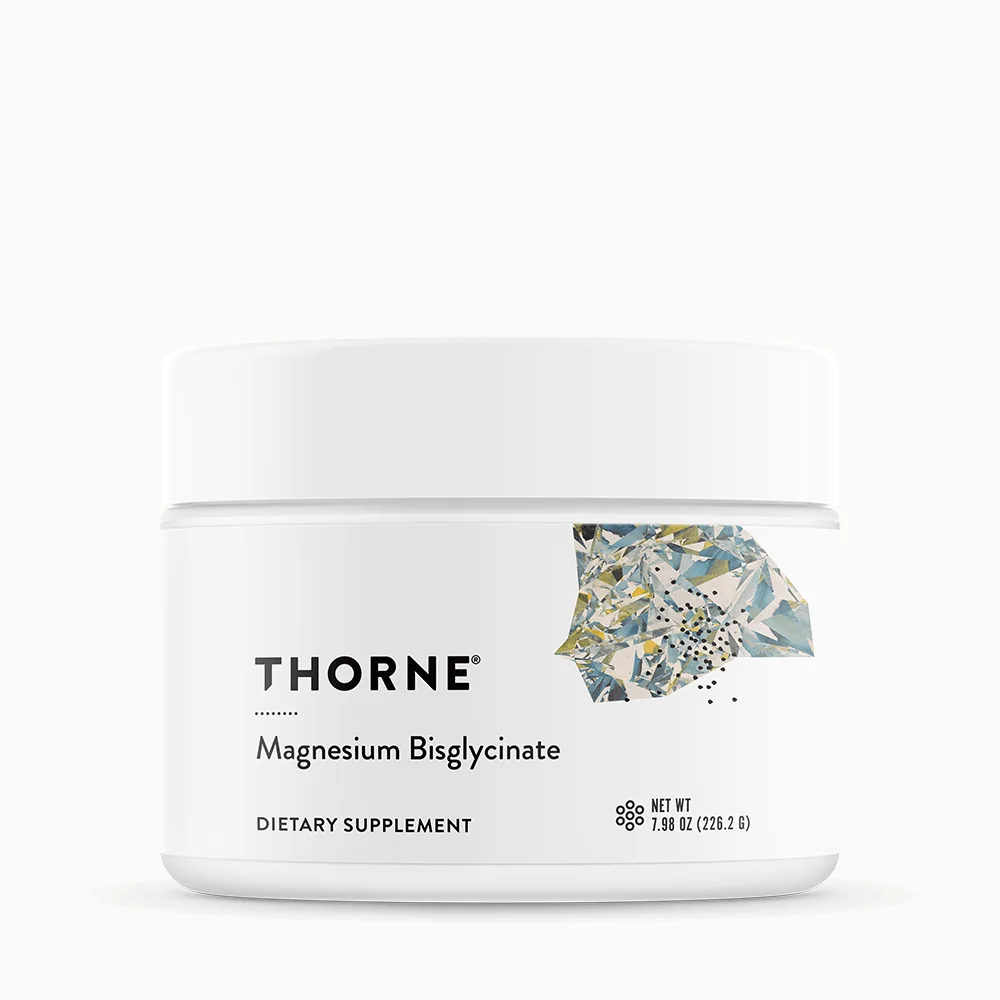
Thorne Magnesium Bisglycinate review: definitely well worth it
We may earn a commission if you buy through our links or codes.
Best overall — a premium pick that earns its place if you like powder.
Our verdict
Best overall — a premium pick that earns its place if you like powder.
As an Amazon Associate, we may earn from qualifying purchases.
Why we landed on Definitely Well Worth It
Best overall — a premium pick that earns its place if you like powder.
Who we'd buy it for People who prefer a magnesium powder and value product-specific quality documentation.
Who we'd tell to skip it Travelers or anyone who prefers capsules — go with Pure Encapsulations.
The part we will not talk past Higher price per serving than capsule competitors
Pros
- High-quality bisglycinate form
- Powder mixes easily into water
- Made by a clinically-respected brand
- Clean ingredient list
Cons
- Higher price per serving than capsule competitors
- Mild taste some find slightly metallic
- Powder format isn't as travel-friendly as capsules
We’d buy Thorne Magnesium Bisglycinate if you prefer a powder and value the brand’s product-specific quality documentation. We’d skip it if you travel or prefer capsules — compare Pure Encapsulations. The elemental-magnesium amount on Supplement Facts is the number the premium has to earn.
The number that actually matters
Before comparing any two magnesium supplements, understand this: the number on the front of the bottle is often not the amount of magnesium you are getting.
Magnesium is always bound to something else — glycine, citrate, oxide. A capsule labelled “1,000mg magnesium glycinate” contains 1,000mg of the compound, not 1,000mg of elemental magnesium. The ratio varies by formula, so use the elemental-magnesium line in Supplement Facts rather than estimating from the front label.
The Supplement Facts panel lists elemental magnesium, which is the figure to compare between products. A bottle with a larger compound amount on the front and a smaller elemental amount on the back is counting two different things.
The adult RDA is 310–420 mg per day from all sources, depending on age and sex. The adult upper limit of 350 mg per day applies to supplements and medications, not food. These are general reference values, not a recommended dose; ask a clinician about individual needs. NIH Office of Dietary Supplements
Why glycinate
Magnesium bisglycinate is magnesium bound to glycine. People often compare it with citrate because citrate can have a laxative effect. The NIH Office of Dietary Supplements notes that absorption varies across forms and that some forms, including citrate, were absorbed more completely than oxide and sulfate in small studies. These comparisons do not establish bisglycinate as a sleep treatment or prove that it will be gentle for every person.
Thorne’s testing credentials
Thorne is one of the few supplement companies where the quality-control story is substantive rather than decorative. Many of its products carry NSF certification, and the company publishes testing detail well beyond the industry norm.
In a category as loosely regulated as supplements, that is the main thing separating a premium price from a marketing premium. Check the current product page for the specific certification carried by the batch you are buying, as this varies across Thorne’s range.
What to use it for
The reasonable, evidence-supported reasons to supplement magnesium:
- Confirmed low intake or deficiency, ideally identified with a doctor rather than guessed.
- Sleep, where evidence remains uncertain: a 2026 systematic review of randomized adult trials found inconsistent results and low to very low certainty of evidence, and did not support magnesium as a routine insomnia treatment.
- Muscle cramps, where results vary considerably between individuals.
- Constipation, though for that specific purpose citrate or oxide is the better-suited and cheaper tool.
Magnesium is not a general-purpose wellness upgrade, and someone eating plenty of leafy greens, nuts, seeds, and whole grains may well not need it at all.
Cost
Premium, and the honest framing is that you are paying for verification and formulation rather than for a different molecule. NOW’s glycinate delivers the same form for considerably less if certification is not your priority.
Who should buy it
Anyone comparing magnesium powders who values a brand with documented testing credentials. Check the elemental-magnesium amount on the current label, and do not assume the product will improve sleep or suit every person’s digestion.
Who should skip it
Skip it if cost is the binding constraint. Skip it if you are treating constipation, where citrate does the job better and cheaper. And skip it if you have not established that you need magnesium at all.
Final verdict
Definitely well worth it for buyers who value Thorne’s product-specific quality documentation and prefer a powder. Compare on elemental magnesium rather than the number on the front, and treat sleep-related claims cautiously.
See our best magnesium for sleep and recovery guide.
Who it's for
People who prefer a magnesium powder and value product-specific quality documentation.
Who should skip it
Travelers or anyone who prefers capsules — go with Pure Encapsulations.
In this review
- Thorne Magnesium BisglycinateBest overall — a premium pick that earns its place if you like powder.Prices change often; use the retailer link for the current price.
Thorne Magnesium Bisglycinate
Definitely Well Worth It
Best overall — a premium pick that earns its place if you like powder.
As an Amazon Associate, we may earn from qualifying purchases.
Frequently asked questions
What does 'elemental magnesium' mean and why does it matter?
Why choose bisglycinate over other forms?
Is Thorne magnesium third-party tested?
Does magnesium actually help sleep?
Do I even need a magnesium supplement?
Affiliate disclosure
Some links on this page may be affiliate links — we may earn a commission if you buy through them, at no extra cost to you. We only recommend products we think are worth considering. Verdicts are not influenced by commissions.
Health disclaimer
This content is for informational purposes only and is not medical advice. Talk to a qualified professional before starting new supplements, treatments, or major health changes.