Waterdrop Glass Pitcher review: good, but not essential
We may earn a commission if you buy through our links or codes.
Best budget glass option — nicer materials, less compelling certification story.
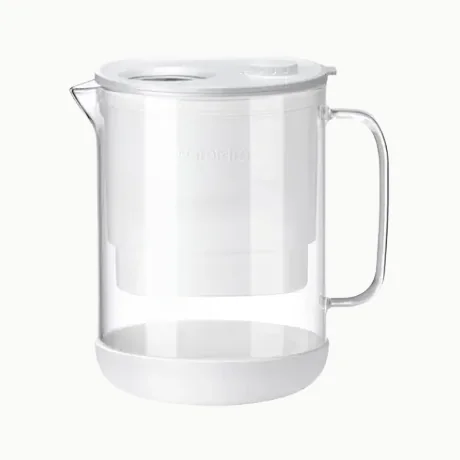
Our verdict
Best budget glass option — nicer materials, less compelling certification story.
As an Amazon Associate, we may earn from qualifying purchases.
Why we landed on Good, But Not Essential
Best budget glass option — nicer materials, less compelling certification story.
Who we'd buy it for People who want a budget glass pitcher and lighter filtration needs.
Who we'd tell to skip it Buyers focused on PFAS, microplastics, or comprehensive testing — LifeStraw is worth the upgrade.
The part we will not talk past Doesn't match LifeStraw or Clearly Filtered on contaminant breadth
Pros
- Borosilicate glass body
- NSF 42, 53, and 372 certified
- Faster flow rate than LifeStraw
- More attractive than most plastic pitchers
Cons
- Doesn't match LifeStraw or Clearly Filtered on contaminant breadth
- Glass is heavier when full
- Smaller filter coverage scope
We’d buy the Waterdrop glass pitcher if you want a budget glass body and only lighter filtration needs. We’d skip it if you are focused on PFAS, microplastics, or comprehensive testing — LifeStraw is worth the upgrade. The glass is the reason to choose it; filtration depth is not.
Quick answer
A filtered pitcher with a glass body rather than plastic, which is the entire reason to choose it. Filtration performance is the thing to verify on the current product page — Waterdrop’s filter range varies considerably by model, and certification differs between them.
The glass argument
Nearly every filter pitcher on the market is plastic. For buyers whose motivation is reducing plastic contact with what they drink — which is a substantial share of people buying water filters — that is an obvious inconsistency.
What glass genuinely gives you: no plastic leaching into the filtered water, no absorption of flavours or odours over time, no gradual clouding or scratching, and easier thorough cleaning. Glass also does not develop the faint plastic taste that older pitchers acquire.
What it costs you: weight, and breakability. A full glass pitcher is heavy, and a dropped one is finished. Households with small children or a crowded fridge shelf should think about this honestly before buying.
Note that lids, handles and filter housings on “glass” pitchers usually still involve some plastic. It is a substantial reduction in plastic contact, not an elimination of it.
On filtration — verify before buying
We want to be straightforward about the limits of what we can tell you here.
Waterdrop produces a wide range of filters across different pitcher models, with meaningfully different contaminant coverage and different certification status. Some carry NSF/ANSI certification for specific standards; others rely on manufacturer or independent lab testing.
Check the current product page for the specific model you are buying, and look for which NSF/ANSI standards it is certified against — 42 covers taste and odour, 53 covers health contaminants including lead, and 401 covers emerging contaminants such as pharmaceuticals.
If a specific contaminant is your reason for filtering, verify that contaminant explicitly. For PFAS in particular, the differences between pitchers are dramatic: ZeroWater and Clearly Filtered achieved effectively complete removal in independent comparative testing, while Brita Elite reduced roughly 22%. Do not assume a pitcher handles PFAS because it filters well generally.
Practical notes
Glass pitchers are heavier full than plastic ones, which matters if the pitcher lives on a high shelf or if lifting is difficult.
Measure your fridge shelf. Pitcher dimensions vary and a glass pitcher is not something you want to wedge.
Handle the pitcher, not the lid, when carrying — lid-first lifting is how these break.
Who should buy it
Anyone whose reason for filtering is reducing plastic exposure, and who finds it incongruous to filter water into plastic. Also anyone who has grown tired of plastic pitchers acquiring a taste over time, and anyone who wants something that looks good enough to put on a table.
Who should skip it
Skip it in a household where a heavy glass object will get knocked off a counter. Skip it if maximum verified contaminant removal is the priority, where ZeroWater and Clearly Filtered have stronger published data. And skip it if you have not checked which specific filter the model uses.
Final verdict
Strong Buy on the glass proposition specifically. It resolves a genuine inconsistency in the category, and the everyday experience of a glass pitcher is better than plastic in several small ways. Just verify the filtration specification of the exact model, rather than assuming it matches the best performers in the category.
See our best water filter pitchers guide.
Who it's for
People who want a budget glass pitcher and lighter filtration needs.
Who should skip it
Buyers focused on PFAS, microplastics, or comprehensive testing — LifeStraw is worth the upgrade.
In this review
- Waterdrop Glass PitcherBest budget glass option — nicer materials, less compelling certification story.Prices change often; use the retailer link for the current price.
Waterdrop Glass Pitcher
Good, But Not Essential
Best budget glass option — nicer materials, less compelling certification story.
As an Amazon Associate, we may earn from qualifying purchases.
Frequently asked questions
Why choose a glass water filter pitcher?
Is it fully plastic-free?
Does it remove PFAS?
What certifications should I look for?
Is a glass pitcher practical day to day?
Affiliate disclosure
Some links on this page may be affiliate links — we may earn a commission if you buy through them, at no extra cost to you. We only recommend products we think are worth considering. Verdicts are not influenced by commissions.