Cobra OPTM fairway wood review: LS vs X vs MAX in 2026
Compare picks & prices ↓Choose the OPTM X fairway if you want the balanced starting point, the LS if you want low spin, and the MAX if a right miss is the problem.
We may earn a commission from our links or codes.
Choose by use case
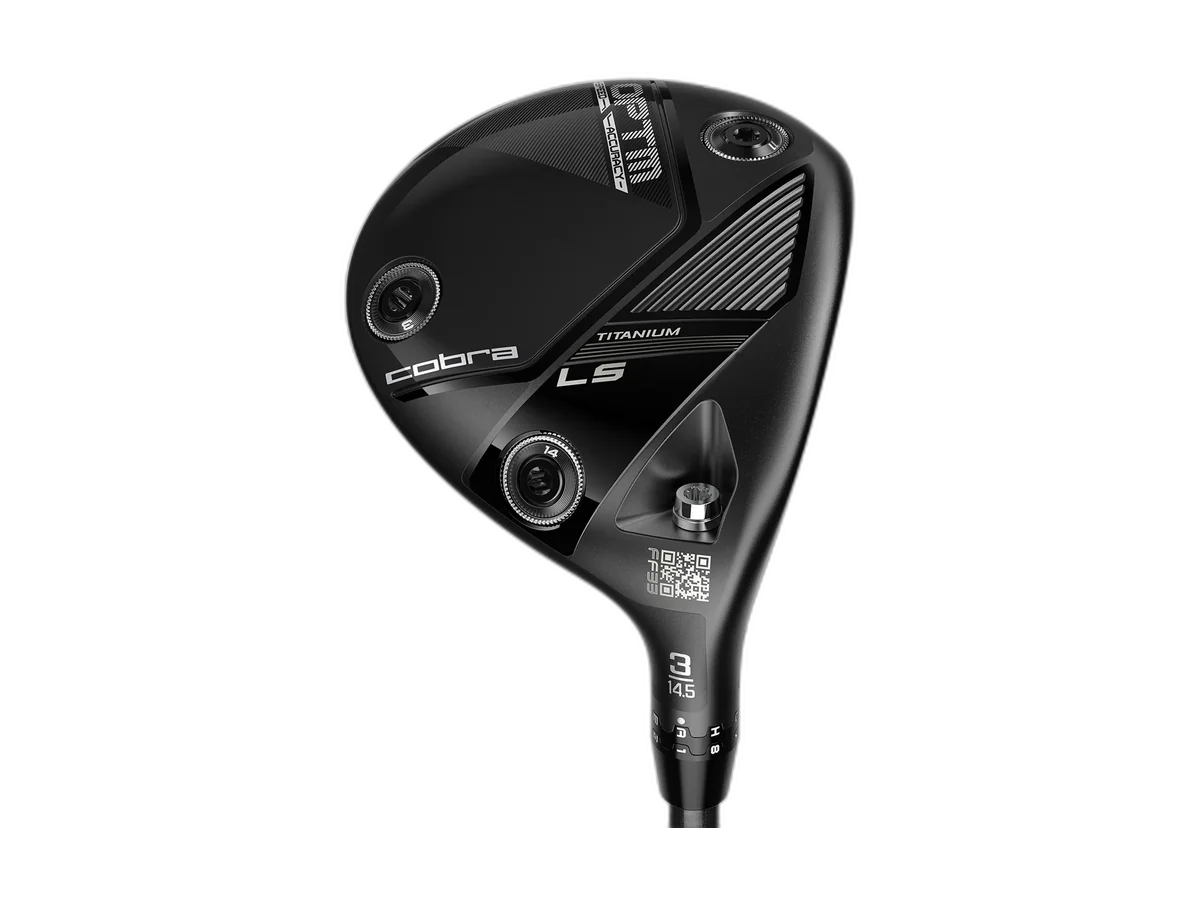
- Cobra OPTM LS Titanium FairwayBest for: Golfers who want a compact, low-spin fairway wood and already have a clear reason to prioritize control.The premium control-first option, with titanium construction and a more specialized low-spin role.Our full review$469 catalog price shown on the official Cobra Golf page when checked September 5, 2026Price snapshot: September 5, 2026Prices change often; use the retailer link for the current price.
-
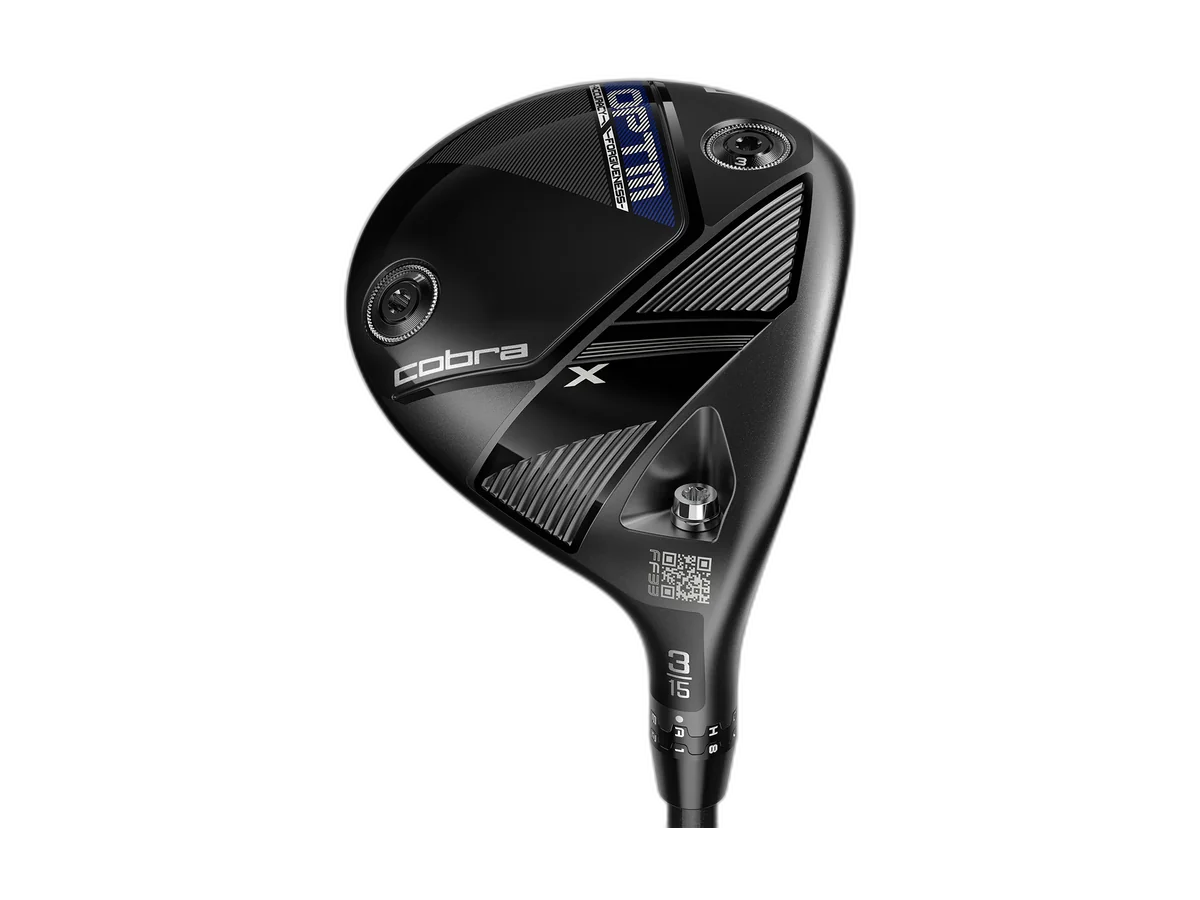 Cobra OPTM X FairwayBest for: Golfers who want a traditional-shaped fairway wood with more launch and forgiveness than the LS positioning.The most balanced starting point in the current OPTM fairway group.Our full review$369 catalog price shown on the official Cobra Golf collection when checked September 5, 2026Price snapshot: September 5, 2026Prices change often; use the retailer link for the current price.
 -
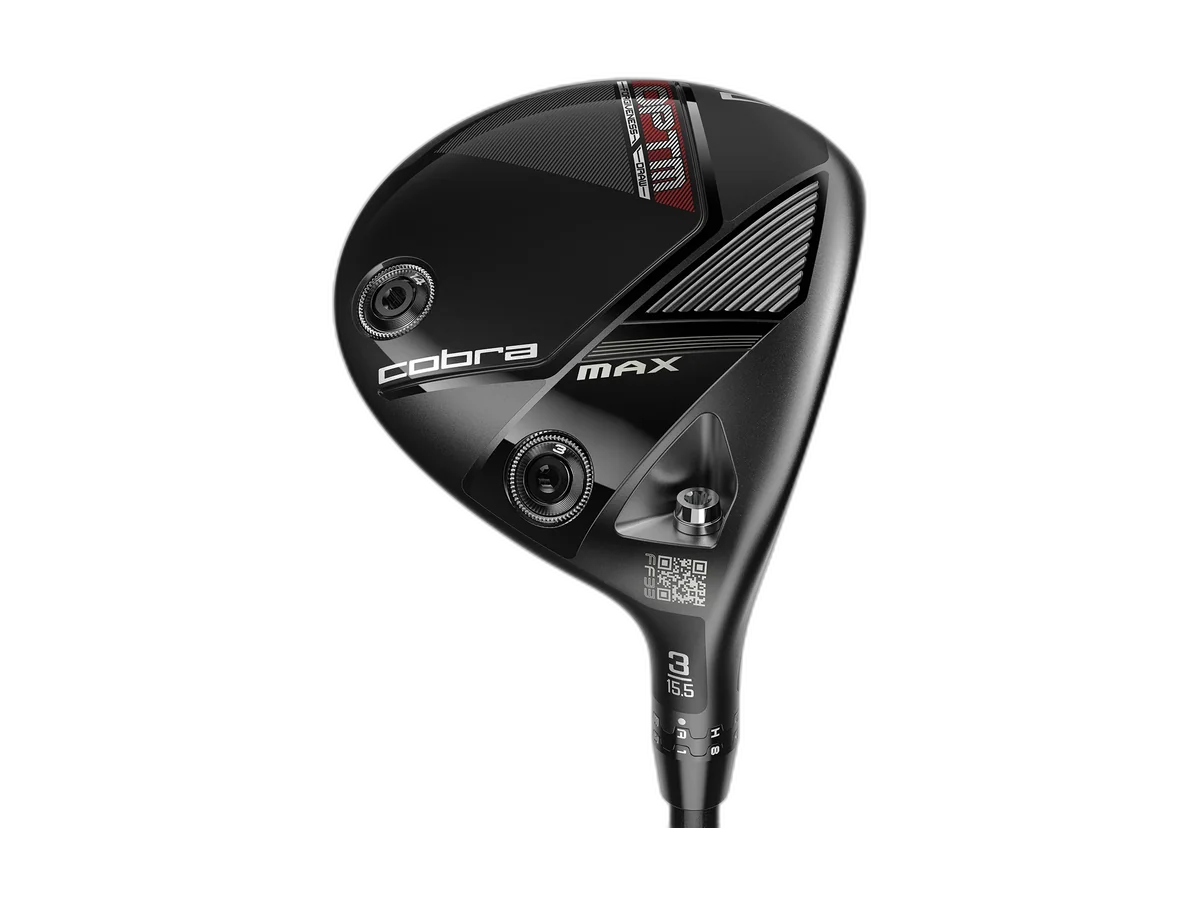 Cobra OPTM MAX FairwayBest for: Golfers who want the X foundation with slightly weaker lofts and heel-biased weighting for a right-miss pattern.The targeted forgiveness choice when draw bias is more important than a low-spin profile.Our full review$369 catalog price shown on the official Cobra Golf collection when checked September 5, 2026Price snapshot: September 5, 2026Prices change often; use the retailer link for the current price.
How we'd choose
| Pick | Our call | Buy it for | The catch |
|---|---|---|---|
| Cobra OPTM LS Titanium Fairway | The premium control-first option, with titanium construction and a more specialized low-spin role. | Golfers who want a compact, low-spin fairway wood and already have a clear reason to prioritize control. | — |
| Cobra OPTM X Fairway | The most balanced starting point in the current OPTM fairway group. | Golfers who want a traditional-shaped fairway wood with more launch and forgiveness than the LS positioning. | — |
| Cobra OPTM MAX Fairway | The targeted forgiveness choice when draw bias is more important than a low-spin profile. | Golfers who want the X foundation with slightly weaker lofts and heel-biased weighting for a right-miss pattern. | — |
-
Cobra OPTM LS Titanium Fairway
- Our call
- The premium control-first option, with titanium construction and a more specialized low-spin role.
- Buy it for
- Golfers who want a compact, low-spin fairway wood and already have a clear reason to prioritize control.
- The catch
- —
-
Cobra OPTM X Fairway
- Our call
- The most balanced starting point in the current OPTM fairway group.
- Buy it for
- Golfers who want a traditional-shaped fairway wood with more launch and forgiveness than the LS positioning.
- The catch
- —
-
Cobra OPTM MAX Fairway
- Our call
- The targeted forgiveness choice when draw bias is more important than a low-spin profile.
- Buy it for
- Golfers who want the X foundation with slightly weaker lofts and heel-biased weighting for a right-miss pattern.
- The catch
- —
The Cobra OPTM fairway lineup follows the same useful pattern as the drivers, but the choice matters even more because fairway woods often have to do several jobs: tee shots, long approaches, recovery from the rough, and distance-gap coverage.
The OPTM X is the fairway we would start most golfers on. Choose the LS if you want low spin, and the MAX if a right miss is the pattern. We did not hit these clubs, so launch still depends on your swing. Confirm loft and stock.
Quick answer
Choose the model that matches the gap in your bag:
- OPTM LS Titanium Fairway: low spin, low launch, and control; the most specialized option.
- OPTM X Fairway: the balanced starting point for launch, forgiveness, and a traditional shape.
- OPTM MAX Fairway: a draw-biased choice when a consistent right miss is the problem.
The X and MAX showed the same $369 catalog price, while LS showed $469. That price difference is not a simple quality ranking. LS is more expensive because it is a more specialized titanium fairway design; X and MAX may be better fits for golfers who need easier launch or more help with a slice.
Cobra OPTM fairway woods at a glance
| Model | Official positioning | Loft options shown | Catalog price checked |
|---|---|---|---|
| OPTM LS Titanium Fairway | Low spin, low launch, maximum control | 3 (14.5°), 3HF (16.0°), 5 (17.0°) | $469 |
| OPTM X Fairway | Accuracy and forgiveness with added launch | 3, 3HF, 5, 7, 9 | $369 |
| OPTM MAX Fairway | X foundation with weaker lofts and heel bias | 3, 5, 7, 9 | $369 |
The live product page is the final source of truth for the exact loft, shaft, flex, handedness, stock, and price.
OPTM LS Titanium Fairway: the control-first option
The LS Titanium Fairway is the most distinctive product in this group. Cobra describes a compact, low-spin head intended to reduce Products of Inertia and tighten dispersion. The official page lists a lightweight 8-1-1 titanium body and face, a carbon crown, and 37.5g of tungsten distributed in the heel and toe.
The club also has three adjustable weights—14g, 11g, and 3g—that can be oriented for neutral, draw, or fade-biased trajectories. FutureFit33 adds 33 loft-and-lie settings with adjustment up to two degrees in either direction, while SMARTPAD is intended to keep the face square as the setting changes.
That is a lot of fitting flexibility, but LS is still a specialist fairway wood. The model is a better fit for a golfer who already knows that low spin and control are the priorities. It is a weaker blind buy when the golfer needs help getting the ball in the air or wants the broadest possible forgiveness. The dedicated OPTM LS Titanium Fairway review covers the titanium construction, three-weight system, loft choices, and $100 premium in more detail.
Pick LS if
- you want a compact, control-led fairway shape;
- your current fairway wood launches too high or spins too much;
- you want a 3HF option around 16 degrees; and
- you are willing to confirm that the $100 premium buys a feature you can use.
Test carefully if
- your miss is already low and short;
- you struggle to launch fairway woods from the turf; or
- you are choosing it only because titanium sounds more premium.
OPTM X Fairway: the balanced starting point
The X is the natural first comparison for most golfers who want a modern fairway wood without a highly specialized low-spin or draw-bias brief. Cobra describes it as a classic shape built for accuracy and forgiveness, with slightly more spin and launch than LS through back-weighted positioning.
The official page lists two adjustable weights: 11g and 3g. Cobra says the heavier weight can sit in back for higher launch and more forgiveness or in the toe for lower launch and reduced spin. That gives the X a practical range without making it as narrowly defined as LS.
With 3, 3HF, 5, 7, and 9 loft options, X also covers more distance gaps than the LS listing. This makes it the most versatile model on paper for a golfer building a fairway-wood section one club at a time.
The key question is still fit. A 7-wood or 9-wood can be more useful than a 3-wood when the golfer needs height and stopping power, while a strong 3-wood can be better for tee shots. Choose the loft for the shot, not the number on the club.
The dedicated OPTM X Fairway review covers the current $369 price, 3-through-9 loft range, two-weight system, and the questions to answer before choosing X over LS or MAX.
OPTM MAX Fairway: the draw-biased option
MAX uses the same general shaping and performance foundation as X, but Cobra describes slightly weaker lofts and heel-biased weighting intended to correct a slice. That makes it the targeted choice for a golfer whose fairway-wood miss consistently starts or curves too far right.
The MAX listing shows 3, 5, 7, and 9 loft options. The weaker lofts can help launch, while the heel weighting gives the golfer a specific bias to test. Neither feature guarantees a straighter shot: face-to-path, strike location, shaft, lie, and setup still determine the ball flight.
MAX is a poor fit for a golfer who already turns the ball over or wants to work the fairway wood both ways. It is also not a substitute for checking whether the real issue is an overly long club, the wrong shaft, or a delivery problem. The dedicated OPTM MAX Fairway review covers the current loft table, weight positions, and slice-versus-fit tradeoff in more detail.
Which OPTM fairway wood should you compare first?
| If your priority is… | Start with… | Why |
|---|---|---|
| Low spin and control | OPTM LS Titanium Fairway | The model is explicitly positioned around low-spin accuracy |
| A balanced, versatile starting point | OPTM X Fairway | More loft options and a launch/forgiveness middle ground |
| Help with a consistent right miss | OPTM MAX Fairway | Heel-biased weighting is the specific design direction |
| A higher-lofted fairway option | OPTM X or MAX | Both lists include 7 and 9 options; verify the live configuration |
| Maximum fitting adjustability | OPTM LS Titanium Fairway | Three weights plus FutureFit33 are listed on the official page |
If you are unsure whether the real gap is 3-wood, 5-wood, 7-wood, or hybrid, measure your current carry numbers before ordering. Many golfers gain more from a better-spaced top end of the bag than from replacing a single club with a newer version of the same loft.
What to verify before checkout
- Exact loft, shaft, flex, length, swing weight, grip, and handedness.
- Whether the club is primarily for tee shots, long approaches, or rough recovery.
- Carry and launch compared with the driver, hybrid, and neighboring fairway wood.
- Current stock, custom-build timing, shipping, warranty, and return terms.
- Whether draw bias or low-spin weighting matches your actual miss.
- Whether the $100 LS premium solves a measured problem.
Cobra’s product pages emphasize fitting and adjustment. Use those tools to answer a specific ball-flight question rather than cycling through settings without a target.
Final verdict
The OPTM X Fairway is the best first comparison for most golfers, LS is the control-first specialist, and MAX is the targeted draw-biased option. Confirm the actual loft and the job the club needs to do before spending $369–$469. The best fairway wood is the one that fills a real distance or confidence gap, not the one with the most elaborate technology story.
For the matching driver lineup, read the Cobra OPTM driver comparison. For a different top-of-bag option, see the Cobra hybrid versus mini-driver comparison. Well Worth It Lab may earn a commission from this links above, at no additional cost to the buyer.
-
Cobra OPTM LS Titanium Fairway
Golfers who want a compact, low-spin fairway wood and already have a clear reason to prioritize control.
-
Cobra OPTM X Fairway
Golfers who want a traditional-shaped fairway wood with more launch and forgiveness than the LS positioning.
-
Cobra OPTM MAX Fairway
Golfers who want the X foundation with slightly weaker lofts and heel-biased weighting for a right-miss pattern.
Frequently asked questions
Which Cobra OPTM fairway wood should I buy?
What is the difference between the OPTM LS, X, and MAX fairway woods?
How much do Cobra OPTM fairway woods cost?
What lofts are available?
Is the OPTM MAX Fairway a cure for a slice?
What should you still check before you buy?
Affiliate disclosure
Some links on this page may be affiliate links — we may earn a commission if you buy through them, at no extra cost to you. We only recommend products we think are worth considering. Verdicts are not influenced by commissions.