TriggerPoint GRID foam roller review: the recovery tool that doesn't need an app
We may earn a commission if you buy through this link.
The GRID is still the default foam roller for a reason — firm, durable, and more useful than most massage guns you'll abandon in a drawer.
Our verdict
If you only buy one low-tech recovery tool, make it a proper foam roller. The GRID's multi-density surface and durability beat dollar-store logs and most gimmick rollers.
As an Amazon Associate, we may earn from qualifying purchases.
Why we landed on Strong Buy
If you only buy one low-tech recovery tool, make it a proper foam roller. The GRID's multi-density surface and durability beat dollar-store logs and most gimmick rollers.
Who we'd buy it for Lifters, runners, and desk humans who will actually spend 5–10 minutes on calves, quads, and T-spine a few times a week.
Who we'd tell to skip it You have an acute injury, you want a gentle massage feel only, or you already own a firm roller you use.
The part we will not talk past Still uncomfortable if you're new to rolling — that's partly the point
Pros
- Multi-density GRID pattern digs in without feeling like a PVC pipe of pain
- Hollow core is lighter to carry than solid cheap rollers
- Durable build — years of garage and gym abuse in typical owner reports
- No batteries, firmware, or subscription
Cons
- Still uncomfortable if you're new to rolling — that's partly the point
- Not a substitute for strength work, sleep, or seeing a clinician for injury
- Bulkier to store than a mini roller or peanut
We’d buy the TriggerPoint GRID if you will actually spend 5–10 minutes on calves, quads, and T-spine a few times a week and want one durable multi-density roller instead of a dollar-store log. We’d skip it if you have an acute injury, you want a gentle massage feel only, or you already own a firm roller you use. It is not a substitute for strength work, sleep, or seeing a clinician for injury.
Why GRID instead of a $12 roller
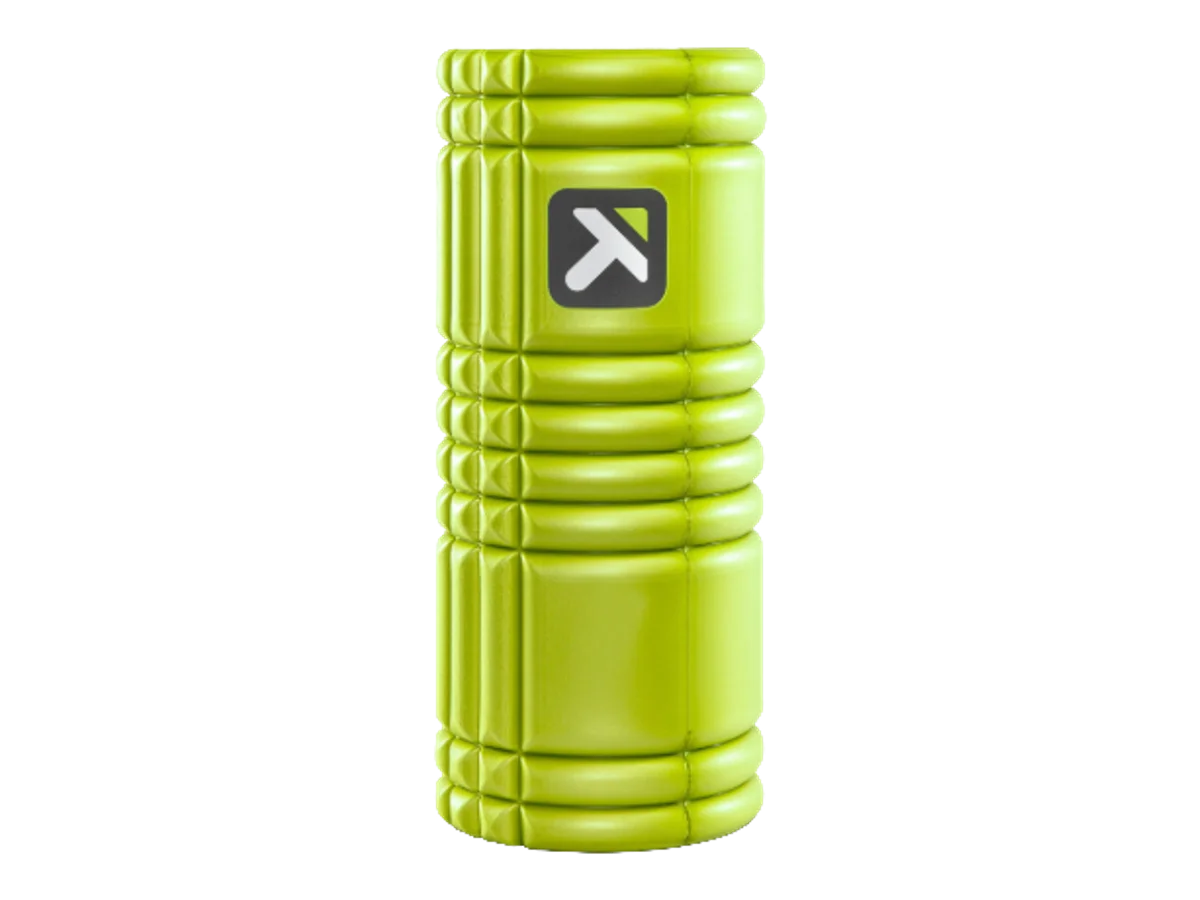
Surface. The patterned GRID gives varied pressure. Smooth cheap rollers are either marshmallow-soft (useless) or PVC-hard (miserable). GRID sits in the usable middle for most people.
Durability. Hollow core + denser foam tends to outlast solid low-density logs that pancake in six months.
Portability. Still a tube you store in a corner — but lighter than solid cheap bulk.
TriggerPoint’s current product page lists the GRID 1.0 at $39.99 and describes a hollow core, EVA foam surface, and the brand’s multi-density GRID pattern. Those are manufacturer specifications, not an independent durability or recovery study; confirm the live price and variant before buying.
How it fits next to a massage gun
If you already like our take on the Hypervolt Go 3, think of the roller as the big-tissue default and the gun as the precise follow-up. Buying the gun first is how people end up with expensive drawer ornaments. Buying the roller first is how people build the habit.
What’s not true
Foam rolling will not “flush toxins,” fix your disc, or replace progressive strength training. Sharp joint pain is a stop sign — soft-tissue tools are not diagnosis.
Who should buy
Anyone training 3+ days a week. Desk workers with angry hips and T-spine. People who tried a gummy supermarket roller and bounced off.
Who should skip
Acute injury without clearance. Absolute beginners who need guided mobility more than hardware. Travelers who only have suitcase space for a mini — get a compact roller variant instead.
Final verdict
Editorial take: Strong Buy. Low drama, high adherence potential, fair Amazon pricing. Link uses our Associates tag; same price to you either way.
Who it's for
Lifters, runners, and desk humans who will actually spend 5–10 minutes on calves, quads, and T-spine a few times a week.
Who should skip it
You have an acute injury, you want a gentle massage feel only, or you already own a firm roller you use.
In this review
- TriggerPoint GRID Foam RollerOriginal GRID 1.0 (13"). Confirm color/size variant on the listing.Prices change often; use the retailer link for the current price.
TriggerPoint GRID Foam Roller
Strong Buy
If you only buy one low-tech recovery tool, make it a proper foam roller. The GRID's multi-density surface and durability beat dollar-store logs and most gimmick rollers.
As an Amazon Associate, we may earn from qualifying purchases.
Frequently asked questions
Is the TriggerPoint GRID foam roller worth it?
Foam roller vs massage gun?
How often should I roll?
Is foam rolling scientifically proven?
Affiliate disclosure
Some links on this page may be affiliate links — we may earn a commission if you buy through them, at no extra cost to you. We only recommend products we think are worth considering. Verdicts are not influenced by commissions.
Health disclaimer
This content is for informational purposes only and is not medical advice. Talk to a qualified professional before starting new supplements, treatments, or major health changes.