Best durable grit pickleball paddles (2026): surfaces that keep their bite
Compare picks & prices ↓Grit is what generates spin, and on most paddles it smooths away within months. The surface technologies that address it, and which ones have evidence behind them.
We may earn a commission from our links or codes.
Promo code PRH Honolulu: Save 10% Honolulu discount code details →
Promo code PRH Vatic Pro: Save $10 Vatic Pro discount code details →
Choose by use case
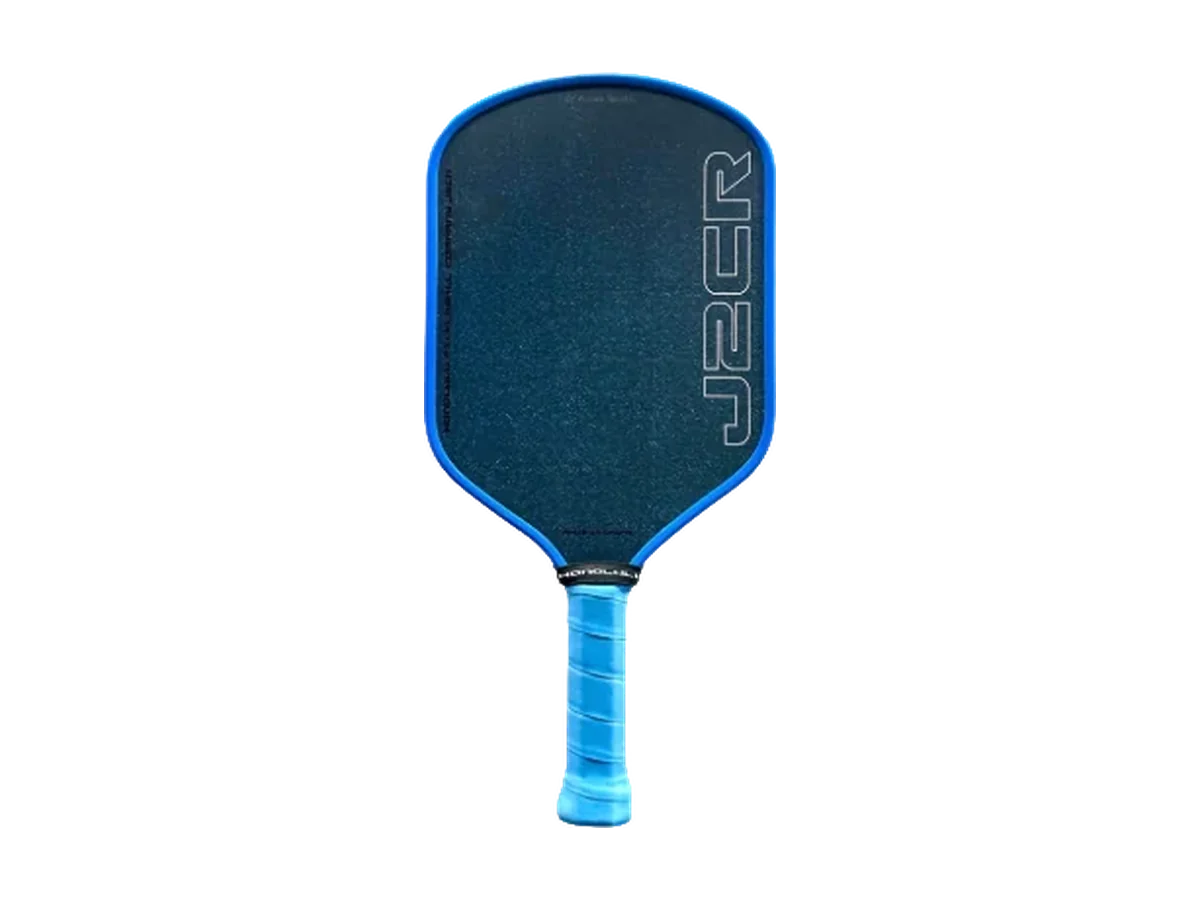
- Honolulu J2CR Crystal Blue Endurance SurfaceDefinitely Well Worth ItBest for: Best overall: mechanically interlocked grit media on an already excellent all-court paddle.Our full review
$195without code$175withcode PRHYou save$20with our codePrices change often; use the retailer link for the current price. -
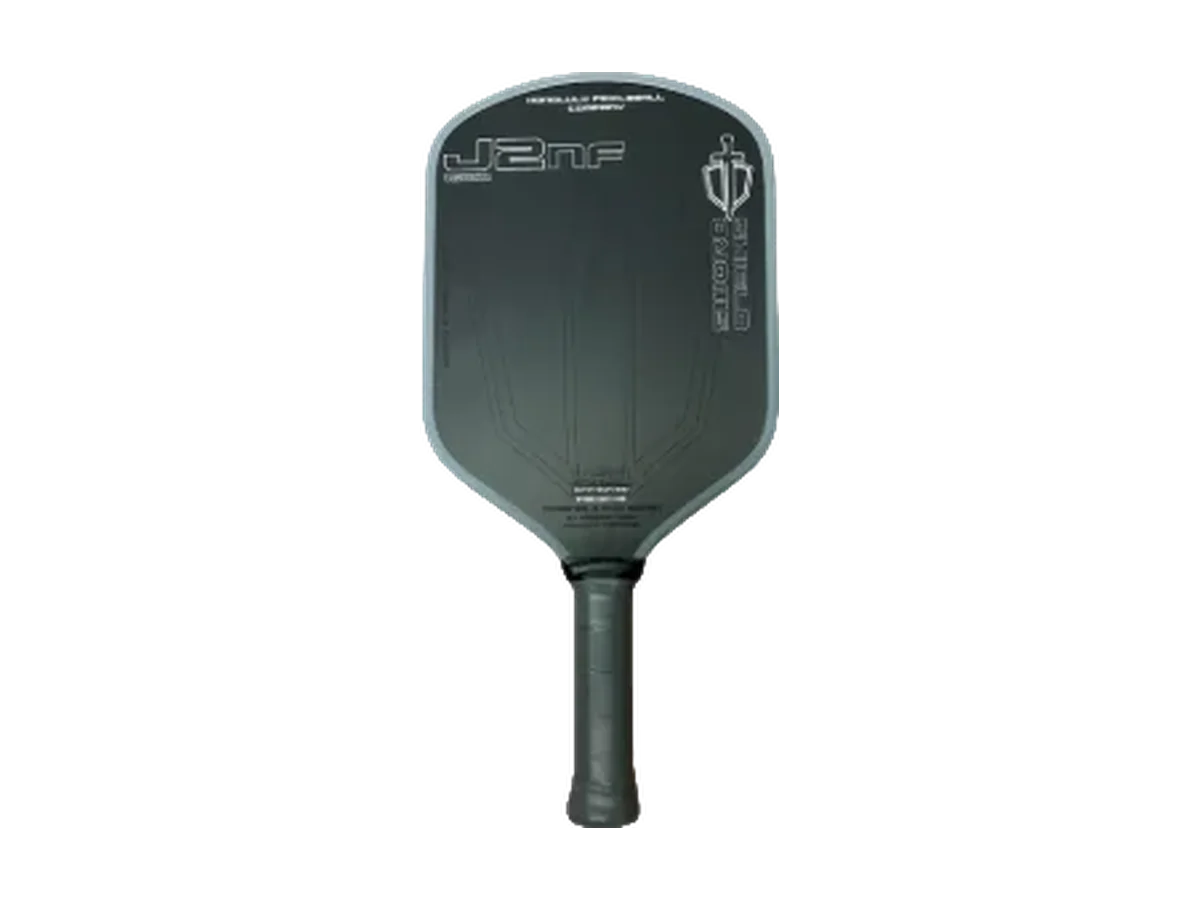 Honolulu Sword & Shield J2NFStrong BuyBest for: Standard CFC carbon that held spin past 12 hours in PaddleReviewHub testing.Our full review
$195without code$175withcode PRHYou save$20with our codePrices change often; use the retailer link for the current price. -
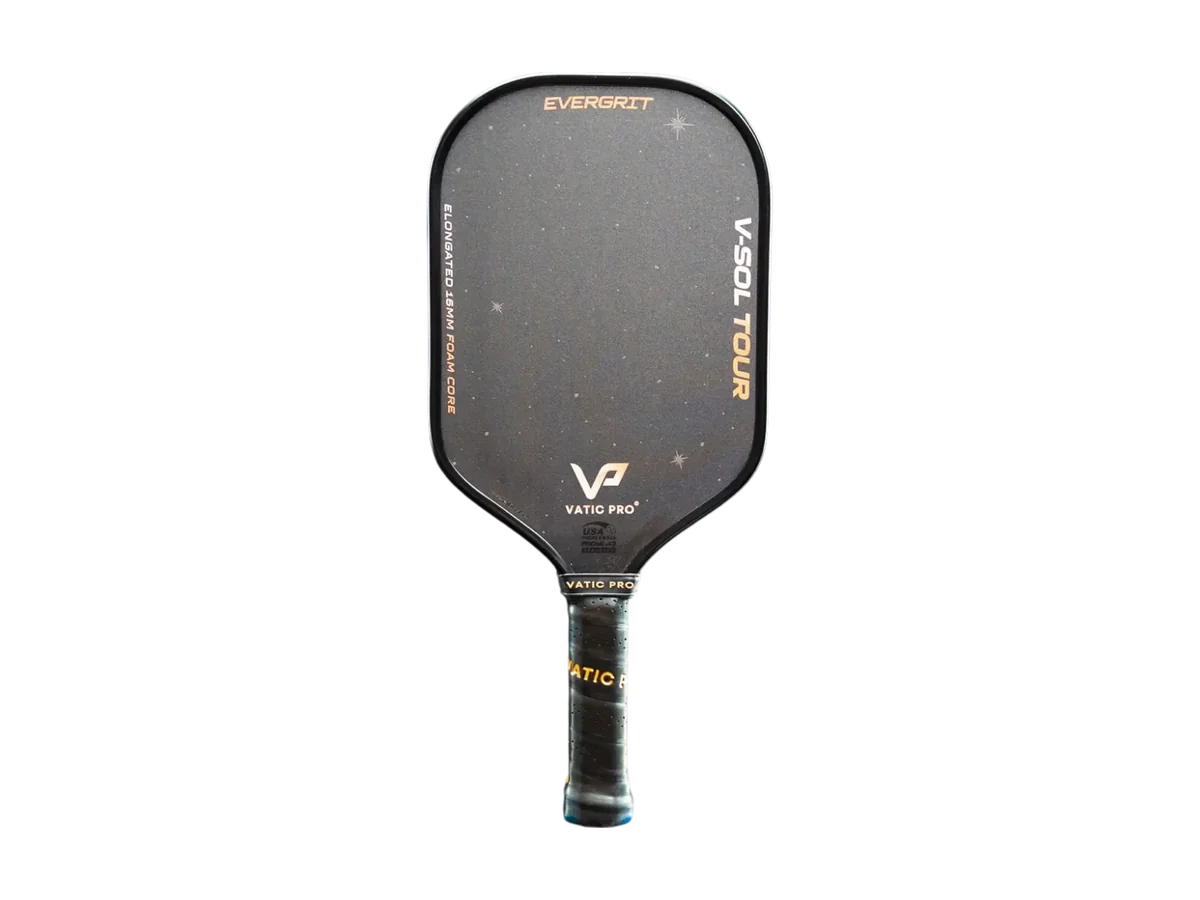 Vatic Pro V-Sol Tour Elongated 16mmStrong BuyBest for: Budget option built around a grit-retention pitch, with a one-year warranty.Our full review
$109.99without code$99.99withcode PRHYou save$10with our codePrices change often; use the retailer link for the current price. -
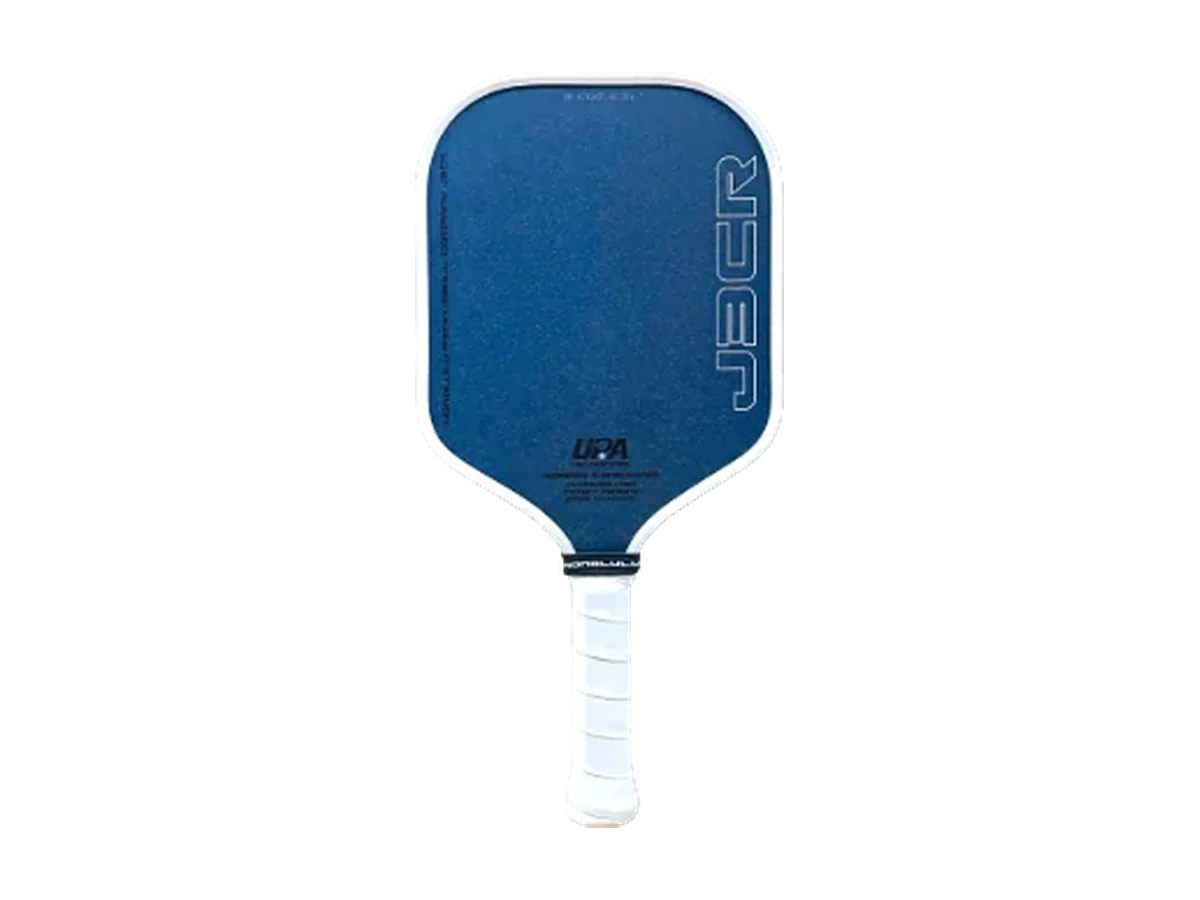 Honolulu J3CR Crystal Blue Endurance SurfaceStrong BuyBest for: The square-shape version of the endurance surface, for players who want maximum forgiveness.Our full review
$195without code$175withcode PRHYou save$20with our codePrices change often; use the retailer link for the current price.
How we'd choose
| Pick | Our call | Buy it for | The catch |
|---|---|---|---|
| Honolulu J2CR Crystal Blue Endurance Surface | Definitely Well Worth It | Best overall: mechanically interlocked grit media on an already excellent all-court paddle. | — |
| Honolulu Sword & Shield J2NF | Strong Buy | Standard CFC carbon that held spin past 12 hours in PaddleReviewHub testing. | — |
| Vatic Pro V-Sol Tour Elongated 16mm | Strong Buy | Budget option built around a grit-retention pitch, with a one-year warranty. | — |
| Honolulu J3CR Crystal Blue Endurance Surface | Strong Buy | The square-shape version of the endurance surface, for players who want maximum forgiveness. | — |
-
Honolulu J2CR Crystal Blue Endurance Surface
- Our call
- Definitely Well Worth It
- Buy it for
- Best overall: mechanically interlocked grit media on an already excellent all-court paddle.
- The catch
- —
-
Honolulu Sword & Shield J2NF
- Our call
- Strong Buy
- Buy it for
- Standard CFC carbon that held spin past 12 hours in PaddleReviewHub testing.
- The catch
- —
-
Vatic Pro V-Sol Tour Elongated 16mm
- Our call
- Strong Buy
- Buy it for
- Budget option built around a grit-retention pitch, with a one-year warranty.
- The catch
- —
-
Honolulu J3CR Crystal Blue Endurance Surface
- Our call
- Strong Buy
- Buy it for
- The square-shape version of the endurance surface, for players who want maximum forgiveness.
- The catch
- —
Here is the thing almost nobody tells you before your first serious paddle purchase: the paddle will stop generating spin long before it stops working.
The core outlasts the surface. And the surface — the grit — is what puts rotation on the ball. A structurally perfect paddle with a smoothed face is a paddle that no longer does the thing you bought it for.
This guide leans on the paddle database we share with PaddleReviewHub, including their on-court durability notes. Where we cite hours of play, that is their testing, not ours — our angle here is the ownership economics and which claims have evidence behind them.
Prices, stock and codes change without notice. Verify in the live cart before ordering.
Why grit disappears
On most paddles, grit is not part of the face. It is a texture applied to the top of it.
Raw carbon fiber faces are given texture during manufacture — a peel-ply finish leaves a rough surface when the ply is removed. It bites hard when new. Every topspin brush wears it.
Painted or coated surfaces wear faster still.
The wear rate scales with how you play. Heavy topspin drives are the shot that abrades a face, which produces an irritating asymmetry: the players who most want spin are the players who destroy grit fastest.
What “endurance surface” actually means
Two genuinely different approaches are worth distinguishing.
Mechanically interlocked media. Honolulu’s Crystal Blue Endurance Surface uses a crystal-infused particulate encapsulation process — the grit media is interlocked into the face rather than sitting on top of it. PaddleReviewHub’s notes describe this explicitly as not being peel-ply that flakes off in a month. This is a construction difference, not a coating, and it is the most credible technical answer in the category.
Grit-retention formulations. Vatic’s Evergrit is marketed as a long-lasting grit carbon face. The pitch is plausible; the independent hours behind it are thinner. PaddleReviewHub’s own notes are candid that it should be treated like any carbon face until more play time is logged.
The distinction matters: one is a described manufacturing process, the other is currently a brand claim. Both may work. Only one has an explained mechanism.
The picks
Best overall: Honolulu J2CR Crystal Blue Endurance Surface — $195
The strongest combination available: the endurance surface applied to what is already the most complete all-court paddle in our data — top-tier control, forgiveness, and spin, with power that gives up very little.
PaddleReviewHub’s notes report the Crystal Blue face as noticeably coarser than standard raw carbon out of the box, with genuinely impressive bite on topspin drives. The trade they flag is real and worth knowing: the more aggressive texture picks up ball dust faster, so wiping it down between games keeps the bite consistent.
If you play several times a week and spin is central to your game, this is the paddle to buy.
Best standard carbon: Honolulu Sword & Shield J2NF — $195
Not an endurance surface — a conventional CFC carbon face. It earns a place here because PaddleReviewHub’s testing found it still producing consistent spin with minimal surface wear past twelve hours of play, which they note is better grit retention than most raw carbon faces manage.
It also posts the highest control figures in our entire dataset. If you want durability without paying for a proprietary surface technology, this is the evidence-backed conventional option.
Best budget: Vatic Pro V-Sol Tour Elongated 16mm — $109.99
Around $100 after the code, built around the Evergrit grit-retention pitch.
Be clear about what you are buying: this is a promising claim with a one-year warranty behind it, not a verified durability result. PaddleReviewHub says as much. At this price that is a sensible bet — if the surface holds, it is excellent value; if it does not, you have lost far less than on a $200 paddle.
Stock has been tight across the Tour shapes, so confirm the specific shape in the cart.
Most forgiving: Honolulu J3CR Crystal Blue Endurance Surface — $195
The same endurance surface in Honolulu’s square Aero Standard shape, which maximises sweet-spot size and forgiveness.
Worth choosing over the J2CR specifically if forgiveness matters more to you than the all-court balance — newer players, or anyone whose priority is that mishits stay playable. Honolulu also makes a J6CR elongated version for players who want reach and power.
The ownership maths
This is the argument that actually decides it.
If you play three times a week with heavy topspin and a standard raw carbon face loses meaningful bite in six months, you are on a two-paddle-a-year cycle. At $200 a paddle that is $400 annually.
A paddle at the same price that keeps its grit for twice as long halves that. Durable grit is not a performance upgrade so much as a cost-per-season one — and it removes the slow, hard-to-notice decline where your spin fades and you assume your technique has gone off.
For occasional players, none of this applies. Standard raw carbon is completely adequate and the premium is hard to justify.
Looking after any surface
- Wipe the face between games. Ball dust fills the texture and reduces bite; a damp cloth restores it. This is the single highest-return habit, and it matters more on aggressive textures.
- Use a cover in transit. Most surface damage happens in bags, against keys, zips and other paddles.
- Do not use abrasives to “restore” grit. It damages the face and may put the paddle outside tournament roughness rules.
- Keep it out of hot cars. Heat is hard on foam cores and adhesives.
The honest summary
If you play frequently and spin matters to your game, Honolulu’s endurance surfaces are the most credible answer available, and the J2CR is the best paddle to get one on. If you want conventional carbon with evidence behind its wear rate, the J2NF. If you want to test the idea cheaply, the Vatic.
And whichever you buy, wipe the face between games. It is free, and it does more for your spin than most upgrades.
For shape and thickness guidance, see best pickleball paddles 2026. If your elbow is the constraint rather than your spin, best paddles for arm comfort.
-
Honolulu J2CR Crystal Blue Endurance Surface
Definitely Well Worth It · Best overall: mechanically interlocked grit media on an already excellent all-court paddle.
$195without code$175withcode PRHYou save$20with our code -
Honolulu Sword & Shield J2NF
Strong Buy · Standard CFC carbon that held spin past 12 hours in PaddleReviewHub testing.
$195without code$175withcode PRHYou save$20with our code -
Vatic Pro V-Sol Tour Elongated 16mm
Strong Buy · Budget option built around a grit-retention pitch, with a one-year warranty.
$109.99without code$99.99withcode PRHYou save$10with our code -
Honolulu J3CR Crystal Blue Endurance Surface
Strong Buy · The square-shape version of the endurance surface, for players who want maximum forgiveness.
$195without code$175withcode PRHYou save$20with our code
Frequently asked questions
Why does paddle grit wear out?
How fast does grit actually smooth out?
What is the difference between Crystal Blue Endurance Surface and normal raw carbon?
Can you restore grit on a worn paddle?
Is a durable surface worth paying extra for?
Affiliate disclosure
Some links on this page may be affiliate links — we may earn a commission if you buy through them, at no extra cost to you. We only recommend products we think are worth considering. Verdicts are not influenced by commissions.